
Bradford Industrial Museum

Blog: Redeveloping the 1970s Back to Back

December 16, 2024

Our Assistant Curator of Collections, Emma Longmuir was tasked with leading on an updating of the 1970s focused ‘Back to Back’ house (part of the ever-popular run of houses illustrating changing lifestyles. She writes:

Back-to-back houses are a common sight in Bradford. When they were built there were the homes of working-class families who worked in local textile mills and other local industries. At Bradford Industrial Museum we have a row of these houses, with each house representing a different time period. Originally built in Great Horton in 1875, they were moved to the museum brick-by-brick in the late 1980s.

During the 1960s many people moved to Bradford from South Asian countries. At the time, workers were in demand and the local textile industry relied on people from South Asia to fill these roles. We wanted this important story to be featured more within our displays and felt that the 1970s house was the ideal place to tell it.
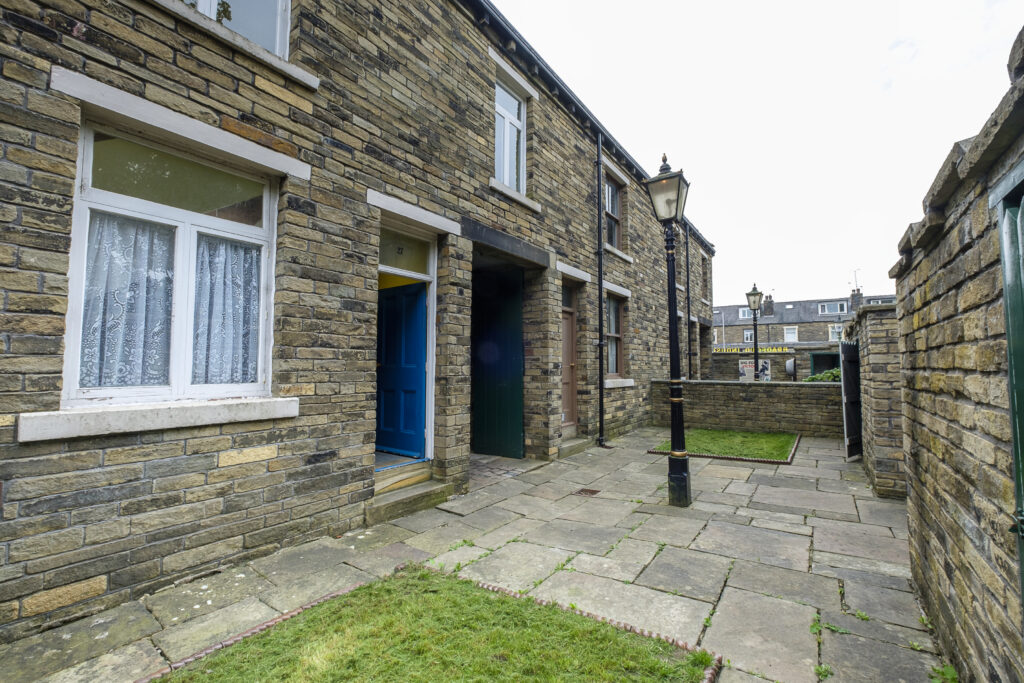
the exterior of a row of back to back houses.  Shows a ginnel (through alley) under one of the windows, and a lampost in the foreground.

Before the redisplay, the entire 1970s house told the story of a Bradford born white working-class couple. We decided to keep the upstairs as it was and redesign the downstairs to represent the home of a family who had recently migrated from Pakistan. This change highlights both the differences and similarities in the lives of these two families.
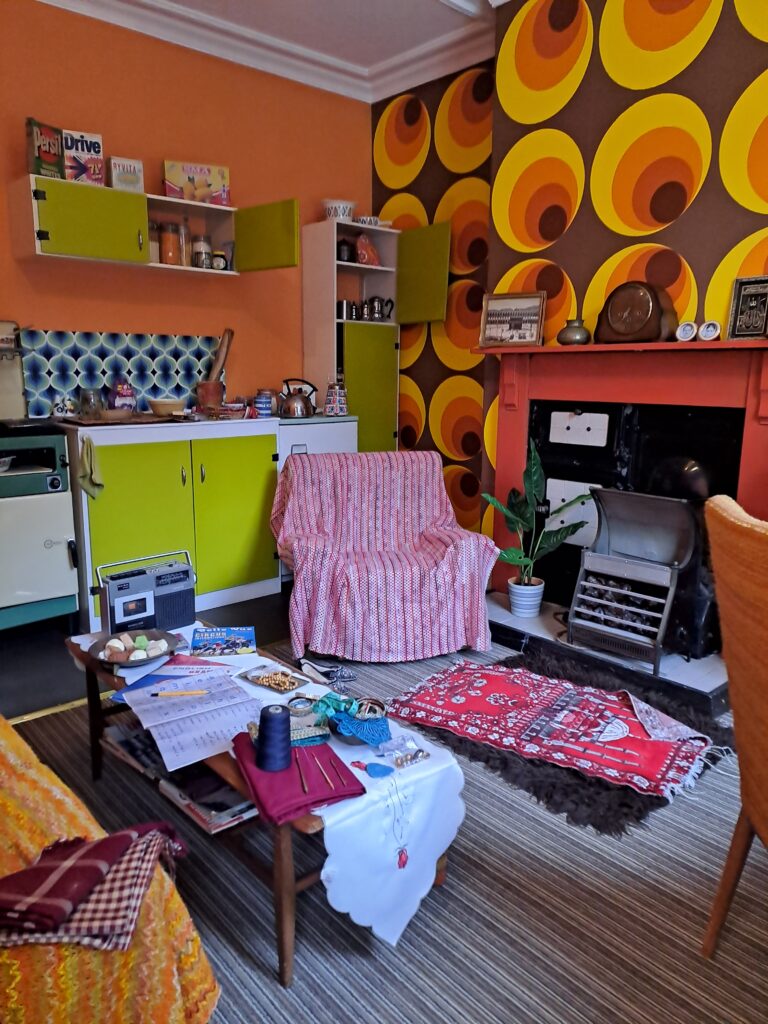
View of kitchen aria, with a chair and the electric fire also in view

As part of the research process, I consulted material within the museum collection from the Bradford Heritage Recording Unit Archive. The Bradford Heritage Recording Unit operated from 1983 to 2003. It aimed to create an audio and photographic record of everyday life in Bradford. The material I consulted included interviews with people who had moved to Bradford from Pakistan in the 1960s. The display also features photographs that were originally taken at the Belle Vue Studio, a local photography studio that became popular with migrant communities in the 1950s, ‘60s and ‘70s.
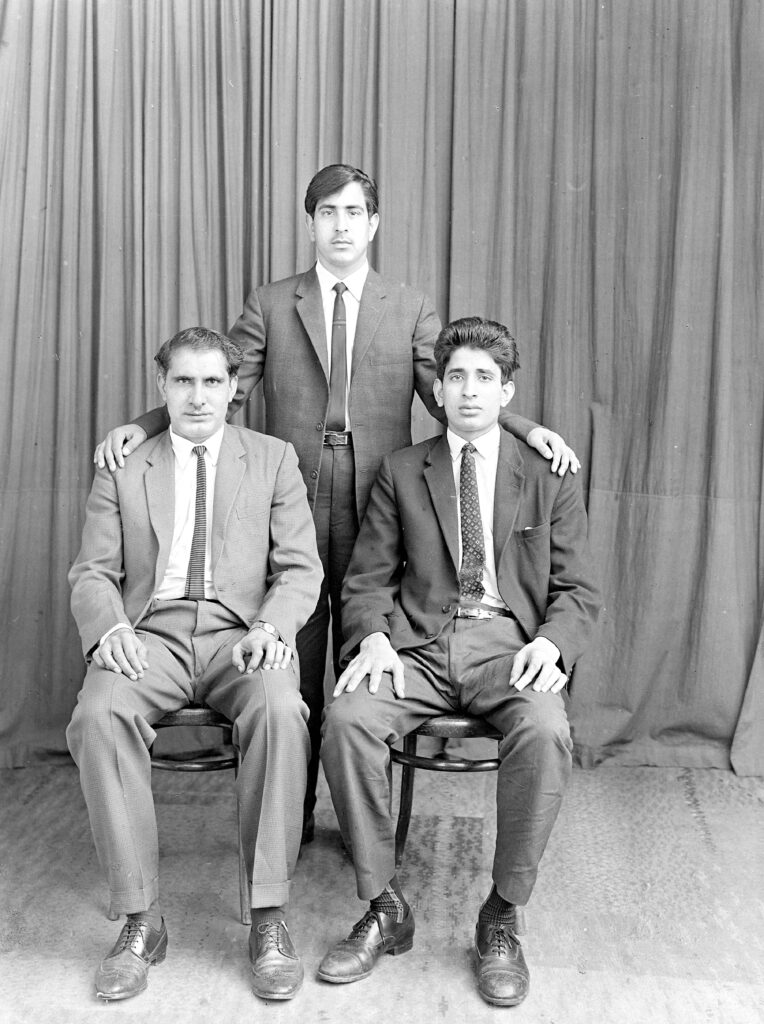
B&W image of 3 Pakistani men, from Belle Vue Archive.  (Ages suggest might be father and two sons?)

To gather more firsthand accounts, I organized a consultation and reminiscence session with a group from WomenZone Community Centre, a fantastic local charity that work closely with women from South Asian communities.

Thanks to our Learning Officer Sofia Fallon, many of the conversations during this session were had in Urdu. We gave the group a behind the scenes look at the display, before hearing about their lives during the 1970s. The group shared details about their homes and leisure activities, like watching South Asian films at local cinemas. Their insights greatly influenced the display’s interpretation and the selection of suitable objects from the collection.
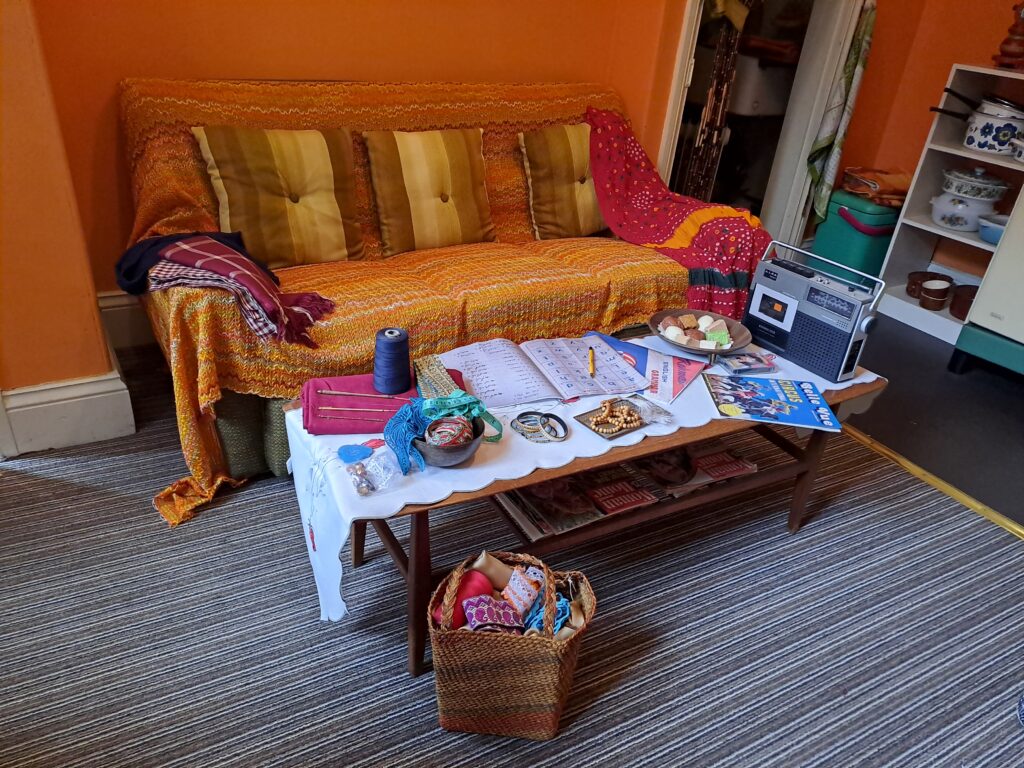
sofa and coffee table visible, mending on view, as well as a cassette radio ont he table, and colourful throws

The redisplay was celebrated as part of a 1970s themed party on the 14th and 15th September 2024. The party was held to marked Bradford Industrial Museum’s 50th anniversary since opening in 1974. During the event we were able to fully open the display to the public.
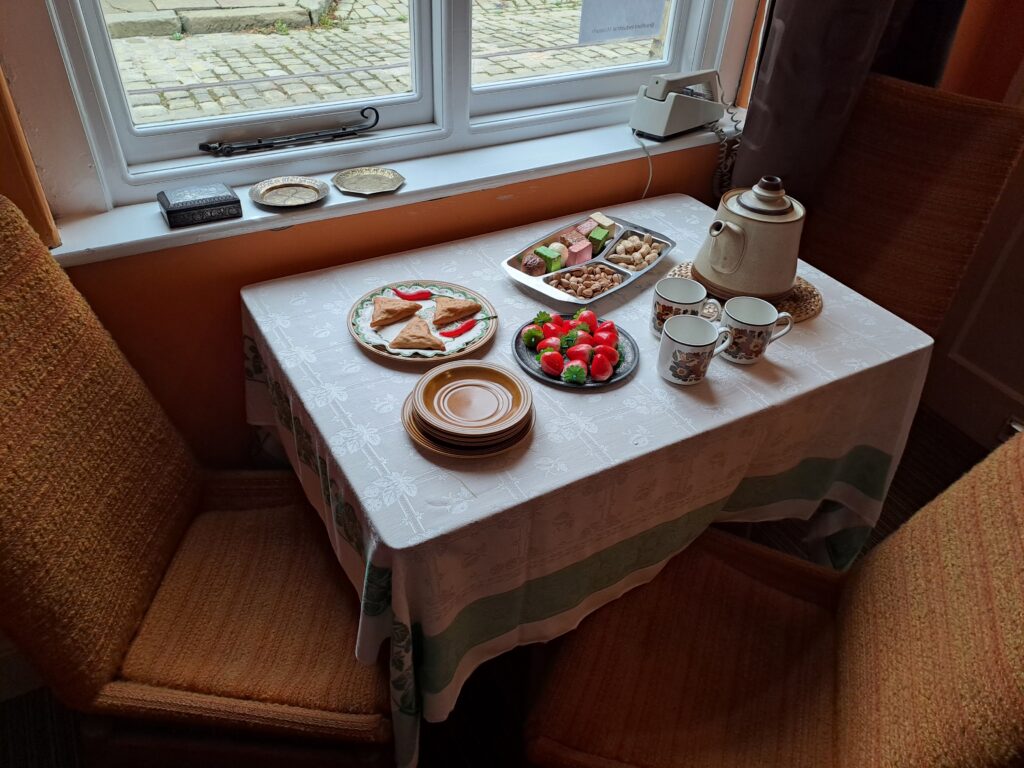
food out on a table-  samosas, pakastani sweets, strawberries, alongside a teapot and teacups

It is normally only visible through glass panels, so it was great to allow people to view it up close and see their reactions. Staff and volunteers were on hand to provide additional details and to answer any questions.

You can now see the finished redisplay at Bradford Industrial Museum, so be sure to check it out on your next visit.

Leave a Reply

Your email address will not be published. Required fields are marked *

News and Blogs from Bradford District Museums & Galleries

Sports clubs, community groups and local history enthusiasts are invited to help bring Keighley's sporting heritage to life at Cliffe Castle Museum's Heritage Open Day on Sunday 13 September 2026. The museum is seeking displays, talks, activities and stories celebrating the sports and pastimes that have shaped local life through the years.
Maleeha Amin has seen first hand how museums can bring people together through inclusion, creativity and representation. From exploring the role of Makaton in making cultural spaces more accessible, to volunteering with local communities and celebrating South Asian artists' voices at Cartwright Hall, she reflects on the small changes and meaningful conversations that help make Bradford's heritage spaces welcoming for everyone.
Khadijah Ali reflects on her journey from volunteering to being appointed as a Lead Museum Young Ambassador.
Our museums are continually evolving as new research, perspectives and community voice deepen our understanding of the past.

Related News and Blogs from Bradford District Museums & Galleries

You may have noticed recently a rather large change to the window on the Grand Staircase at Cliffe Castle
Heather's been meaning to write up the story behind the painting of Pauline Viardot at Cliffe Castle for some time....
It is always an exciting time in the museum when we install a new exhibition. We recently opened a new exhibition at Bradford Industrial Museum called Steampunk (for those unsure as to what Steampunk is, I refer you to an earlier blog post.) Nearly 300 people attended the opening and it was thrilling to see visitors not only excited by the weird and wonderful Steampunk exhibits, but also by the pieces from our permanent collection alongside.
Don’t adjust your screens – this particular embroidery is multicoloured although we describe it as Blackwork. It is called Blackwork because traditionally a black thread was used to sew these designs. It is a type of counted embroidery sewn on even weave material such as linen. It uses simple stitches to form complex patterns.
Bradford District Museums and Galleries Logo
Privacy Overview

This website uses cookies so that we can provide you with the best user experience possible. Cookie information is stored in your browser and performs functions such as recognising you when you return to our website and helping our team to understand which sections of the website you find most interesting and useful.