
This blog has been written by Sophie Powell and Rochyne Delaney McNulty from Equity Partnership. They write:
Equity Partnership is an LGBTQ+ organisation based in Bradford, working with people across the district for over 20 years.
We were approached by Jill Iredale (Community Curator) to collaborate with Cartwright Hall on their upcoming Pre-Raphaelite exhibition with works from the collection, to comment on the pieces in the show and offer our unique LGBTQ+ perspective. We couldn’t be happier with the offer of poking around in the stores, talking about art!
Our Equity Members were keen to get involved and in line with our policy of access, we were able to invite people to be involved online as well as in person. Our group included diverse identities across the gender spectrum, ages and cultures.
For folks who have been to Cartwright Hall to see their inspirational exhibitions, may not be familiar with what is in the stores. The collection across the Bradford sites is vast and includes works by artists including, prints by Elizabeth Frink, Bridget Riley, Christo and Warhol, the David Hockney collection. In the 1990’s the collection started to focus on collecting work by artists from the global majority, to better represent the diverse population of Bradford, boasting Yinka Shonibare CBE, Charmaine Watkiss and Manu Parek on permanent display. We’re very lucky to have such an impressive collection in the district.
And of course, the Pre-Raphaelite Brotherhood collection, spanning works by Ford Maddox Brown, Dante Gabriel Rossetti and Edward Burne Jones, all the way to the William Morris wallpaper gracing the the Refreshment Room walls.
So, on a brisk winter day in January, 10 Equity members met at Cartwright Hall to see behind the scenes with Jill and Emma, (Assistant Curator).
In a dimly lit, low-ceilinged space we were greeted by beautiful drawings and paintings from the Pre-Raphaelite Brotherhood. The group had intricate notes about the works, however, it can’t be understated how different it is to see the pieces in this space, to viewing on a screen or even on the gallery wall, where you are kept at a distance by ropes and taped off areas. To have the works presented on easels within touching distance, in a private view, feels intimate and special, like sharing a conversation directly with the artist.
As a group we had a range of experience with art, from enthusiastic crafters to art school graduates, and were eager to learn from each other’s experiences.
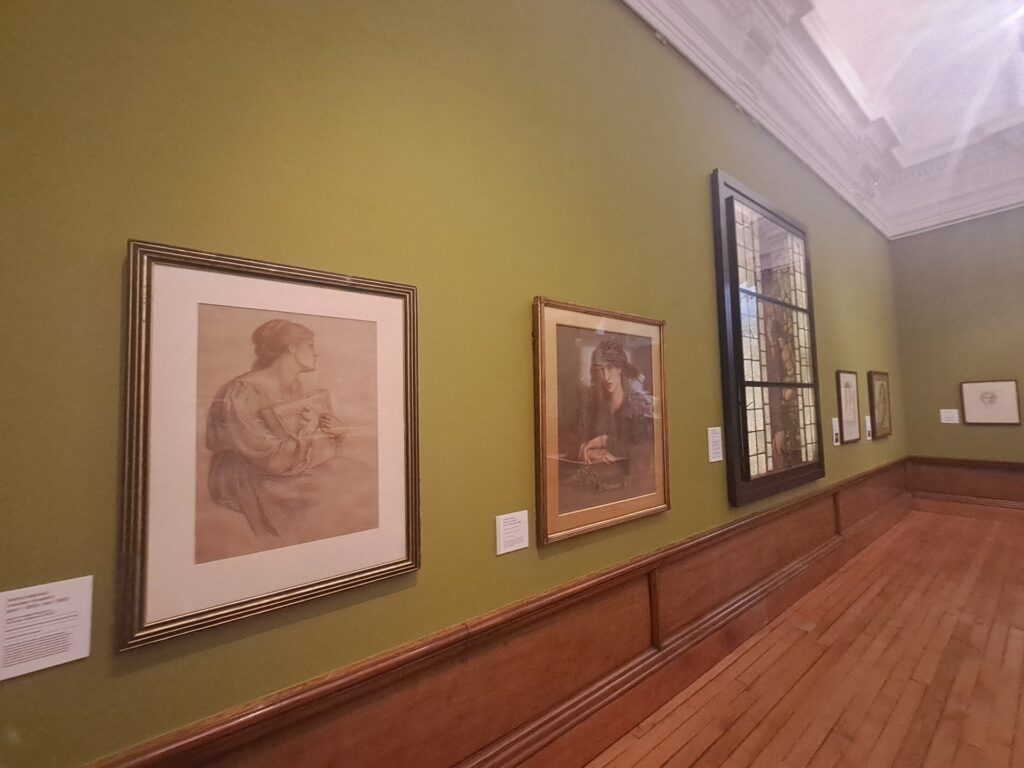
We talked about the process of creating these pieces, how they made us feel and chatted at length about the subjects of the pieces. As a group we were struck by the gender aspects of the drawings and we had long, in depth conversations about the androgyny of Jane Morris, the subject of several Rossetti works on show, including studies for Pandora.
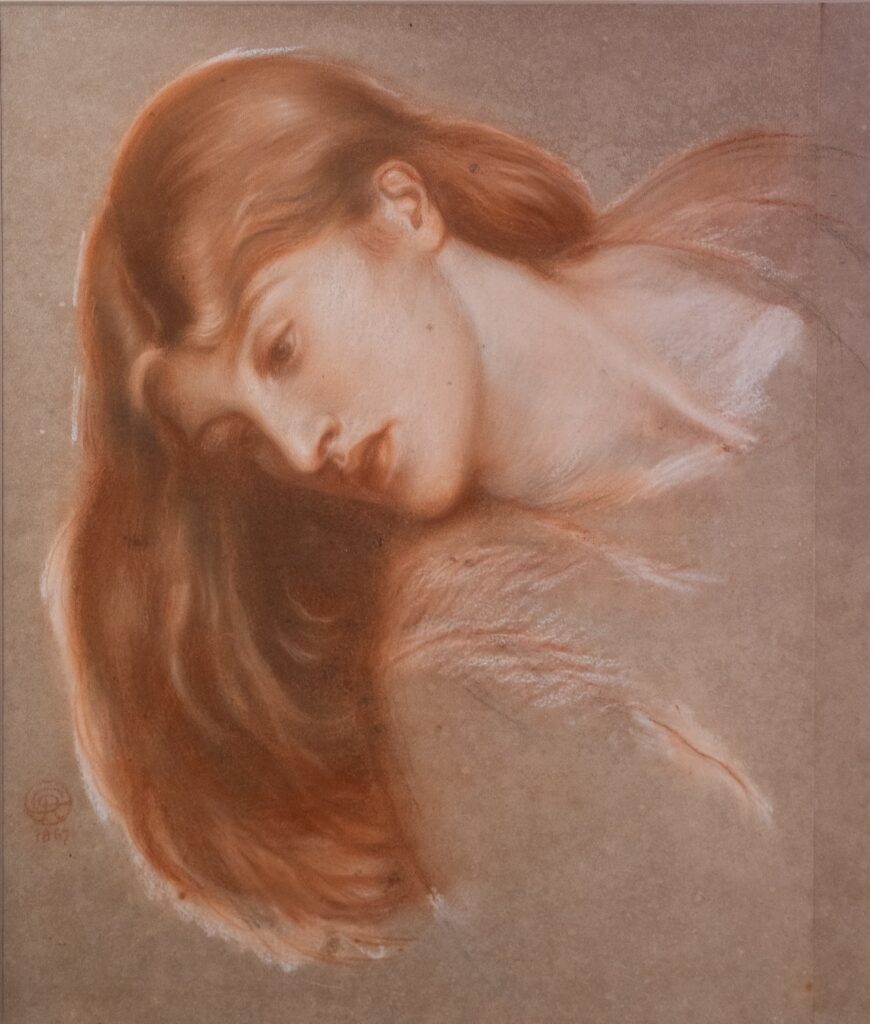
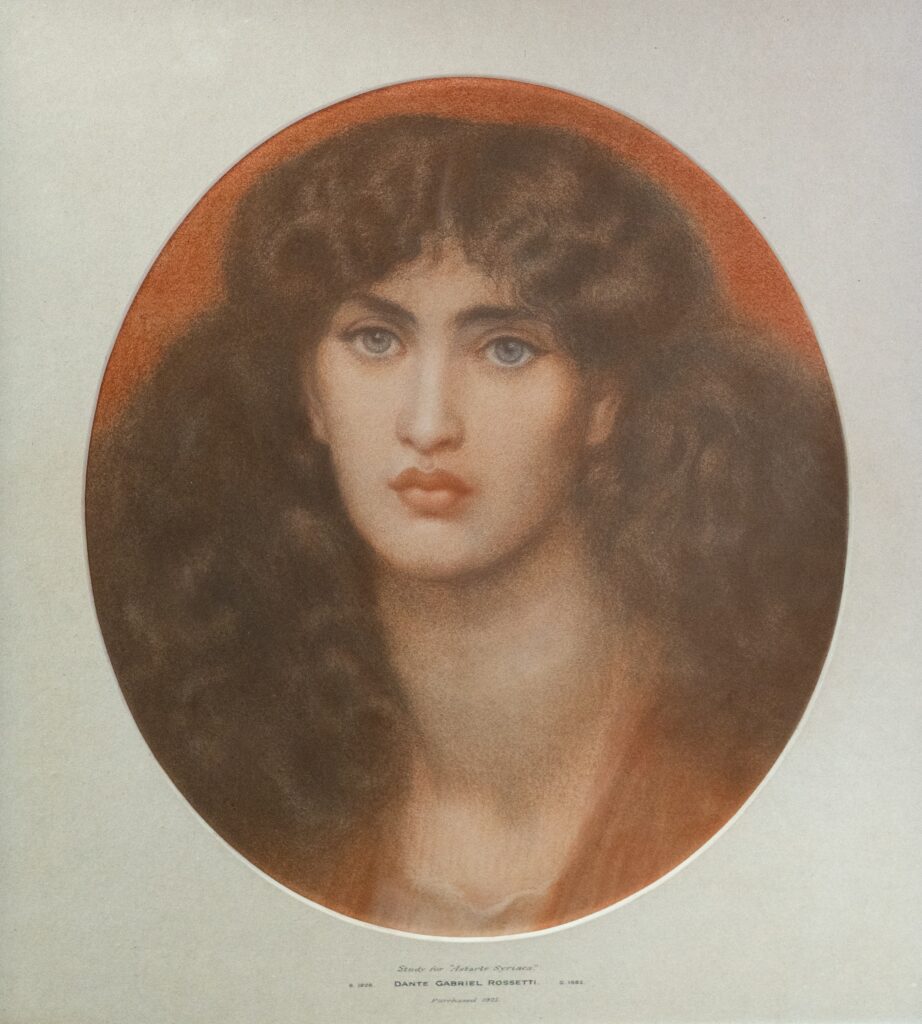
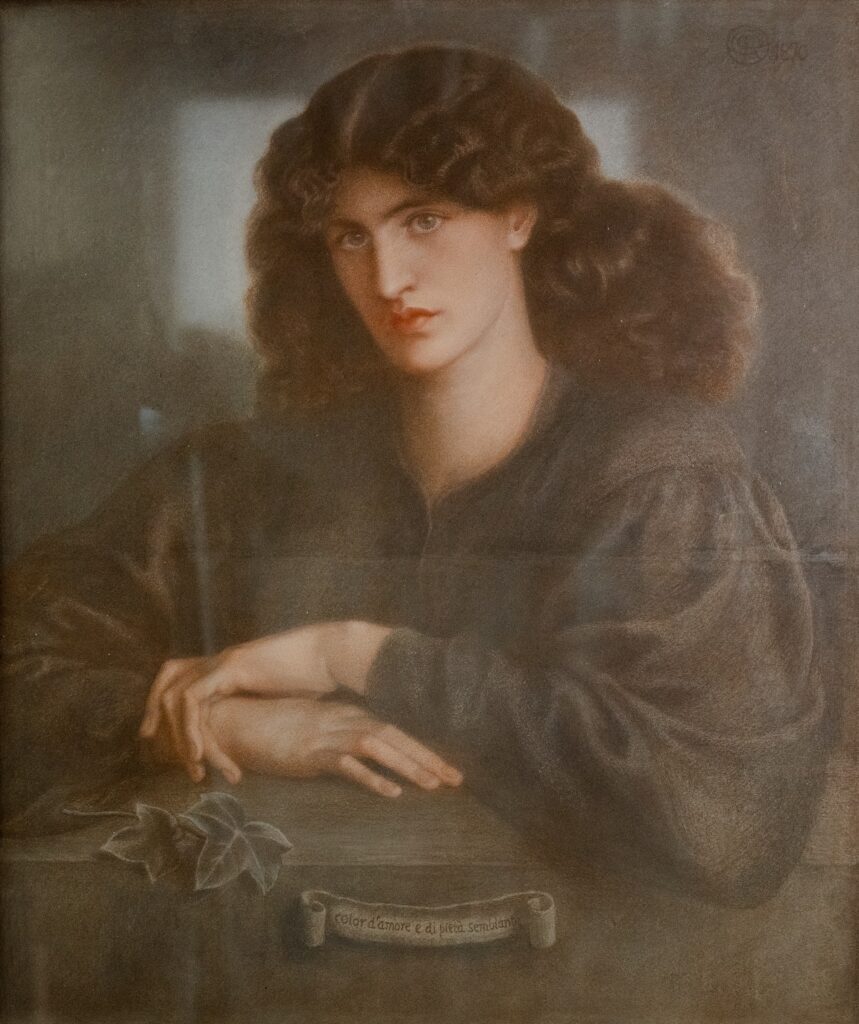
Jane Morris (nee Burden) was a celebrated muse and model for Rossetti and Morris, and self-taught master of ancient embroidery techniques, becoming a renowned embroiderer for the Arts and Crafts movement. Jane Morris is undoubtedly beautiful, and occupies a central position in the PRB canon. Her androgynous features; a strong jawline and tall frame, defy the beauty norms of the time and continue to disrupt conventions today. She brings to mind current figures in the public eye; the activist and model Rain Dove, actors Dua Saleh and Kristin Stewart, all proudly inhabiting androgynous identities and the subject of countless articles discussing the performance of gender. In fact, Jane Morris was often (and continues to be) described as a handsome or striking woman, as if she’s not quite allowed to be the more feminine ‘beautiful’.
In the Queer 1community, we embrace a broad spectrum of gender and identity. We are fascinated by the history of gender and representation, including the Pre-Raphaelite Brotherhood and the rise of body horror with Mary Shelley. The romantic poets and more explicit examples – Anne Lister, Oscar Wilde and Radclyffe Hall were a 19th Century embodiment of Queer, although mainly from a singular, white, middle-class perspective.
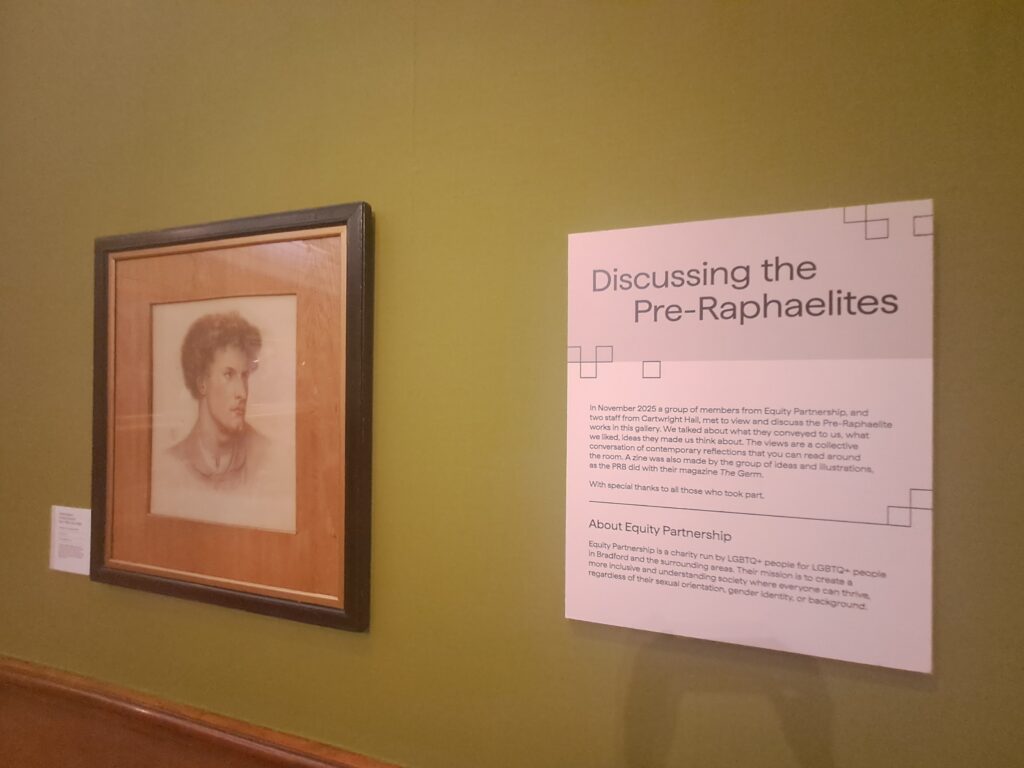
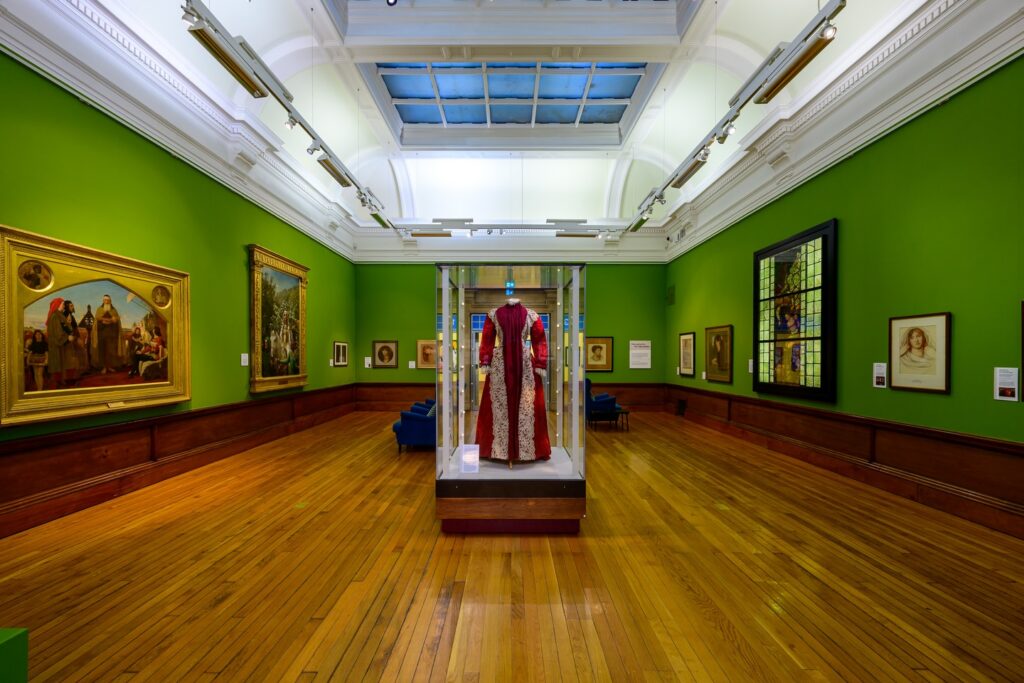
Looking behind the curtain of the Pre-Raphaelite exhibition at Cartwright Hall gave the members of Equity a chance to discuss representation more widely, by looking at art through the Queer lens. These conversations are vital and ever evolving to bring expertise through lived experience into the conversation. This is important work, representation and embodying and celebrating queerness in art is important. Here at Equity Partnership, we’re pleased to be involved in a project where Cartwright Hall have taken a progressive viewpoint, and we welcome more galleries and art collections following suit.
- *Queer is used here interchangeably with LGBTQ+, according to the language of the group. We recognise that the word has been reclaimed in joyful acceptance, whilst also being linked with historic homophobic traumas, and such has a complex history. For more information please read: https://reflections.live/articles/25657/reclaiming-slur-the-history-of-word-queer-by-amtul-aziz-27684-mjgx8h3p.html ↩︎