
March of 2026 is being celebrated as Morris Month, a series of events organised by the William Morris Society and partners. Culminating with William Morris’ birthday on the 24th and his daughter May’s birthday on the 25th, it is a perfect time to learn about the craft, innovation, thinking and activism of the Morrises.
Here in Bradford, we have some significant Morris connections to explore, that this blog is highlighting for Morris Month.
William Morris is probably best known today for his influence on decorative arts and the arts and craft movement, particularly in textile, wallpaper and stained-glass design. His ethos of “Have nothing in your houses that you do not know to be useful, or believe to be beautiful” led to the creation of works of beauty, form and function that were hand make my artisans and crafts people, that are still reproduced and are widely popular today. William travelled to West Yorkshire several times, and there are several places across Bradford that you can find work by Morris & Co, the company he founded as “Morris, Marshall, Faulkner & Co.” with Ford Madox Brown, Edward Burne-Jones, Charles Faulkner, Dante Gabriel Rossetti, P. P. Marshall, and Philip Webb in 1861.
Visiting Cliffe Castle is one of the easiest ways to encounter some Morris & Co glass in Bradford – with a series of panels telling the Cornish legend of Tristan and Isolde on display, that were formerly part of Harden Grange near Bingley. This medieval tale told in glass is a beautiful collection of works featuring a “who’s who” of Pre-Raphaelite artists, with work by William Morris, Dante Gabriel Rossetti, Edward Burne-Jones, Val Prinsep and Arthur Hughes and Ford Madox Brown included across the different glass panels.
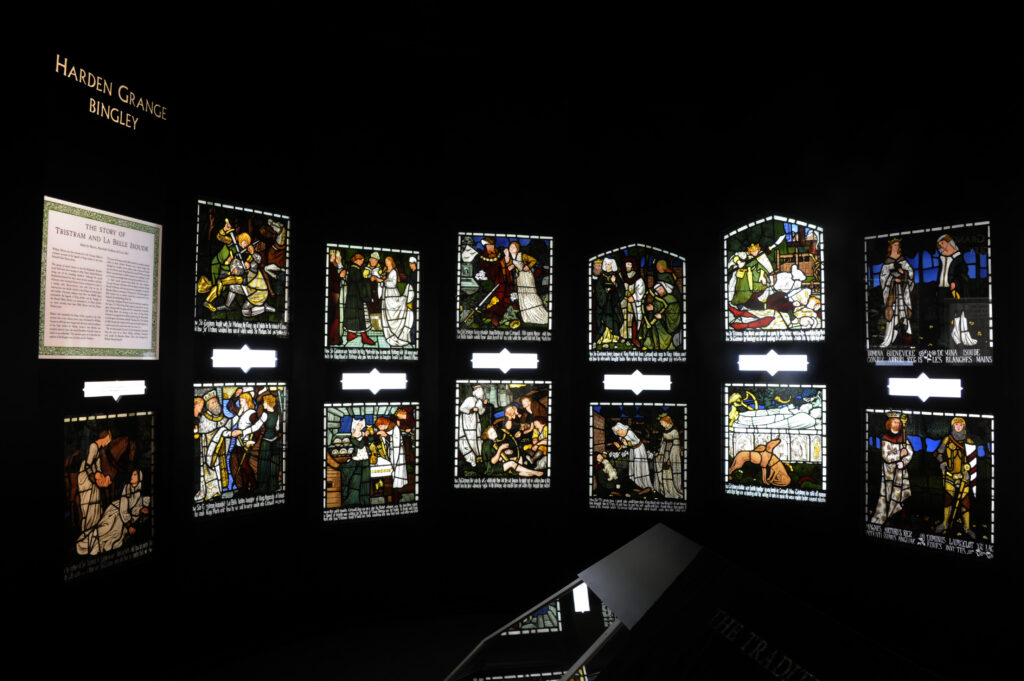
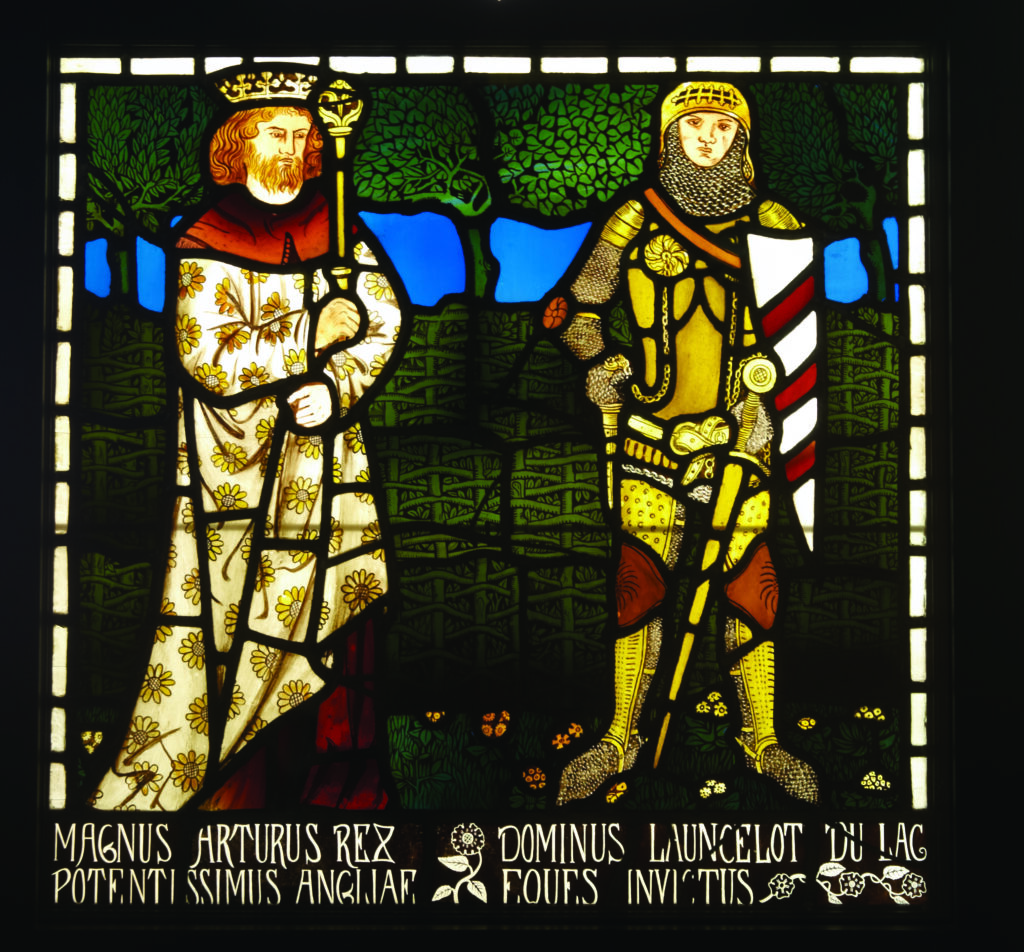
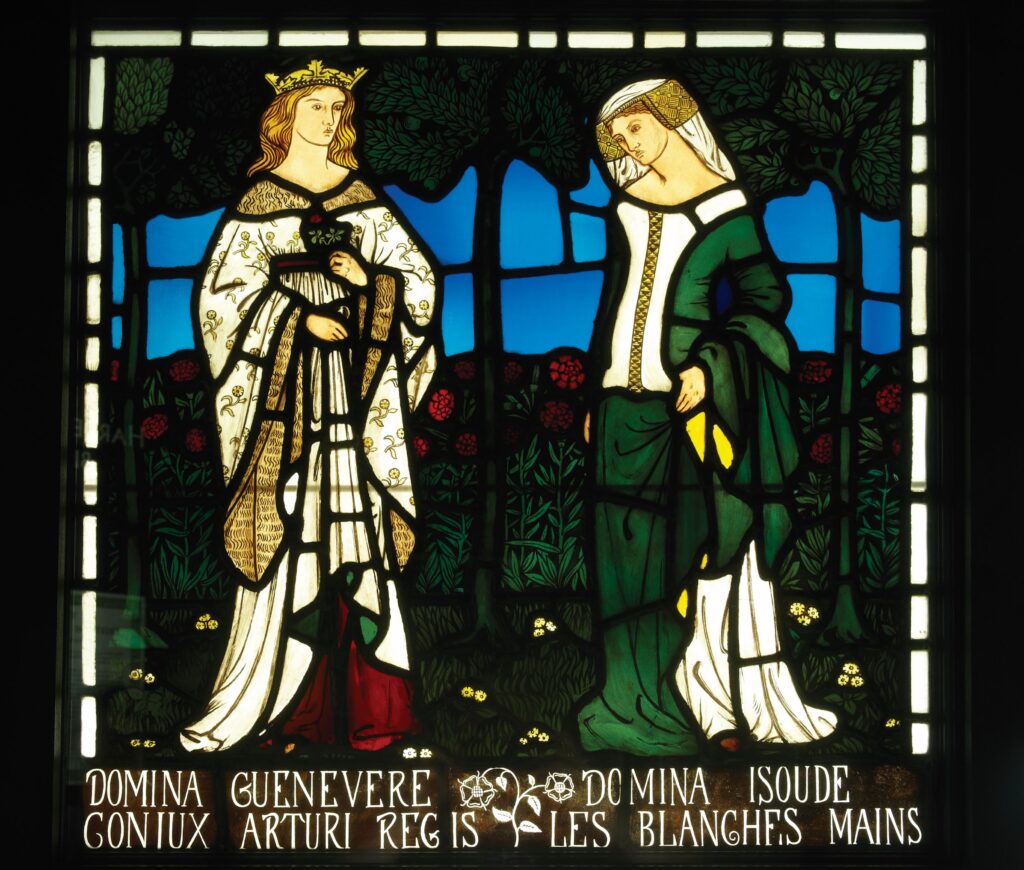
For a much earlier piece of Morris & Co history, a visit to Bradford Cathedral to see their stained glass is essential – the glass now re-situated in the East Window was commissioned in 1863 and was one of the earliest Morris, Marshall Faulner &Co window commissions. Whilst there, you can also see the Morris & Co altar cloth that is likely to have been worked on by William’s daughter May.
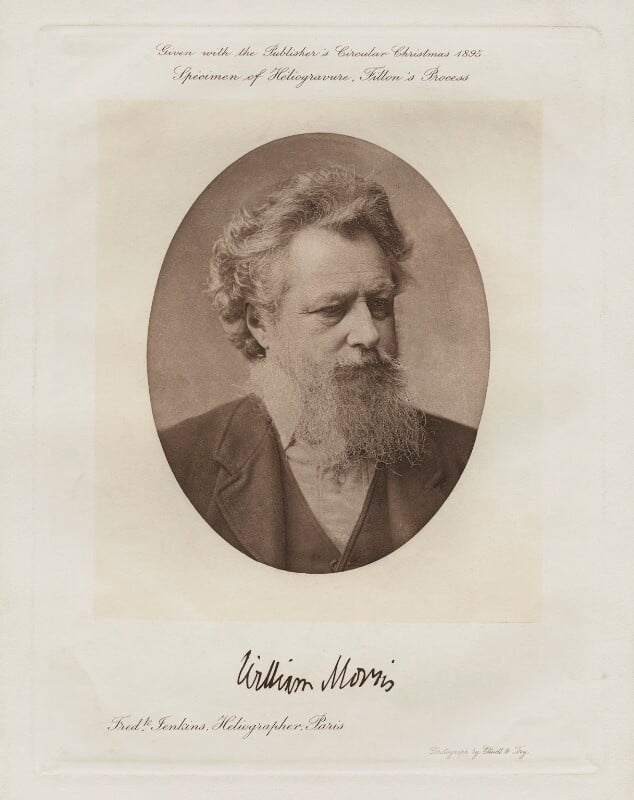
NPG x3752 © National Portrait Gallery, London
As well as artistic endeavors, William Morris also visited Bradford to lecture on socialism. William was one of the founders of the Socialist League in 1884, and as a leader in this movement for revolutionary, working-class led action, he spoke at working men’s clubs and institutions across England and Scotland to share his views and vision. As part of this he spoke at the Co-operative Hall in Shipley, the Temperance Hall and St George’s Hall in Bradford. His talks were inspirational to those who would later form the Independent Labour Party, established in Bradford in 1893.
Given by Emery Walker Ltd, 1956Photographs Collection NPG x19692 © National Portrait Gallery, London
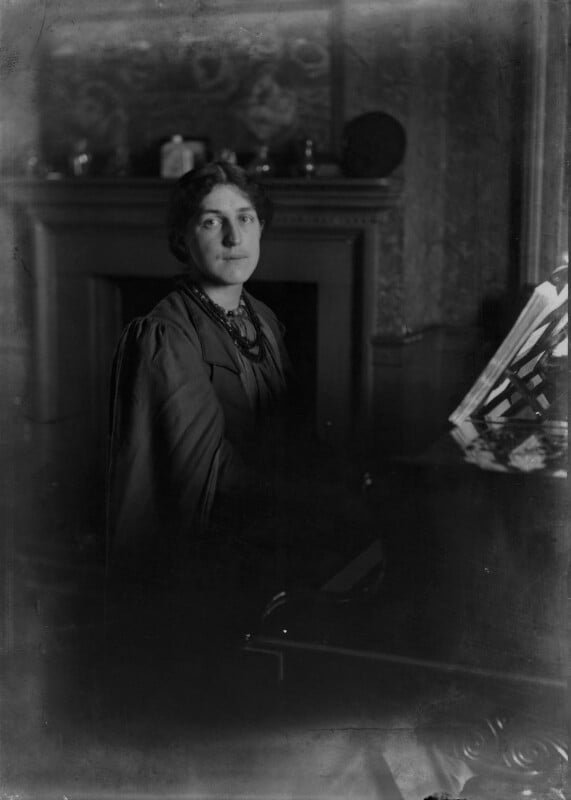
May Morris, the younger daughter of William Morris and his wife Jane Burden, was a highly talented designer and craftswoman. She was Director of Embroidery at Morris & Co, with a lot of her design work being misattributed to her father. As well as being an equally proud proponent of craftspeople and socialism as William, she was vocal about women’s rights and their recognition as craftspeople, leading her to found the Women’s Guild of Arts in 1907 with Mary Elizabeth Turner. She championed free-form, highly skilled embroidery techniques and her style of bold but delicate floral and nature-based patterns is distinct and brilliant. She taught embroidery at the London Central School of Art and was head of the embroidery department until 1905. She was also a highly skilled fine jewelry maker, with some of her work being donated to the National Museum in Cardiff after her death by her long-term companion Mary Lobb.
May travelled extensively in Wales, the Cotswolds and Cornwall with Mary, who was a former Land Army volunteer from the village of Kelmscott nearby the Morris’ summer home at Kelmscott Manor, and later gardener for May. Mary Lobb was a staunch supporter and advocate of May’s skill and prominence, and pushed back against May’s work being labelled as William’s;
Miss Morris could and did both design as well as William Morris and embroider as well [as] any one… and her colour arrangements were unapproachable and original. To design, make and colour work which will hold its own and quite often far outstrip [others]… is what so few grasp and appreciate. They need to have their noses rubbed in it.
We don’t have any direct evidence that they visited Bradford, but their scrapbooks which were donated to the National Library of Wales are still being examined, and the many watercolors of landscapes by May literally paint a picture of their travels together.
However, the Morris & Co embroidered altar frontal cloth in Bradford Cathedral is very likely to have been her work. It probably dates from 1885 and has been altered over the years to replace the original, Morris standard strawberry design with a more religiously iconographic pomegranate one.
It can be viewed in the Lady Chapel, beneath the Morris & Co East Window. You can find it on their Virtual tour here
Morris Month celebrates craft, beauty and skill in the arts, but also the socialist heart of William and May, both of whom championed the rights of the working class and the importance of art and creativity for all.
Bradford District Museums and Galleries will be embodying this in our upcoming “Made by Many Hands” heritage craft exhibition, launching in early May