Ian, one of our brilliant volunteers is still working away on the Butterfield Archive, and found a rather intriguing (and entertaining) newspaper cutting that the family had saved. It gives an interesting insight into some of the happenings in Keighley.
It made both Ian and Heather chuckle at some of the ‘damned with faint praise’ criticisms….
Exhibition at the New Congregational Sunday School
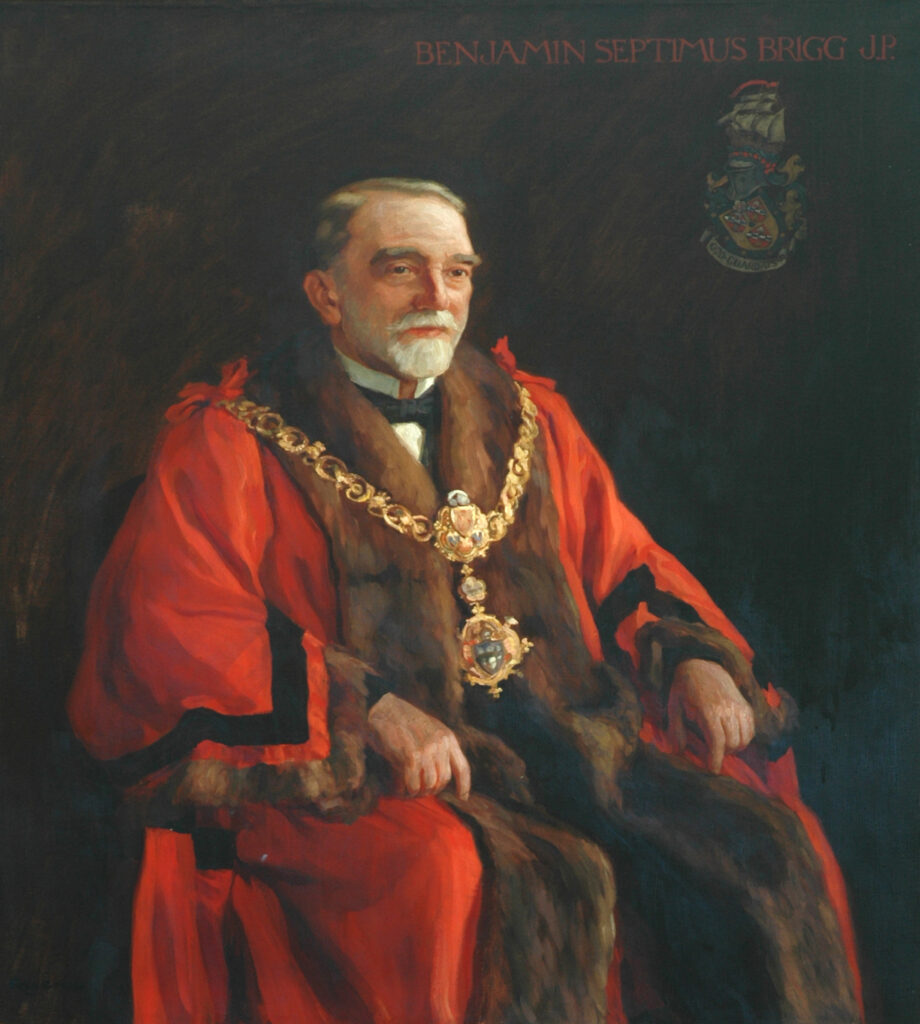
On Wednesday afternoon the exhibition in connection with the Devonshire St young men’s mutual improvement class was opened in the new school on Spencer St by Mr B. S. Brigg.
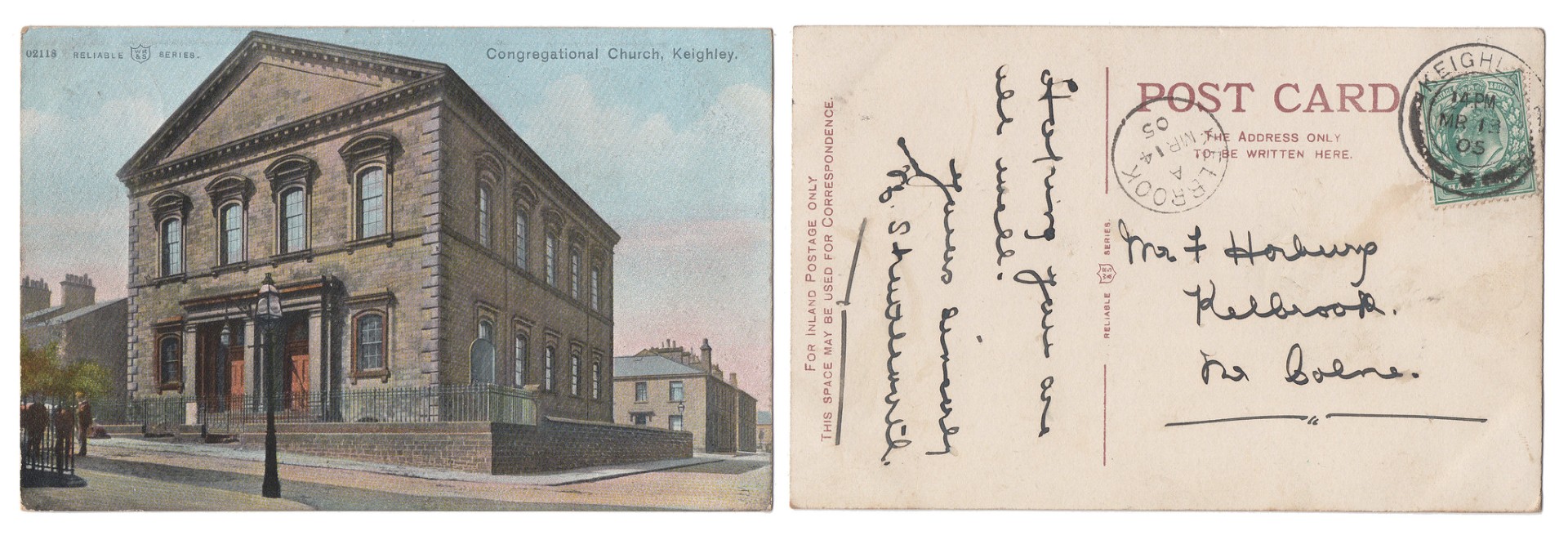
Image of the Congregational Church that the School was associated with. Image courtesy of Tim Neal / Keighley & District Local History Society’
The object of the exhibition was for the purpose of raising funds to lessen the debt of the new school, the class having been allowed the free use of the school, fire and light for their meetings, feeling that they ought to do their share in return for the kindness. The preparations for the exhibition evidently had occupied the class for some time and certainly reflected the utmost credit on their painstaking labours.
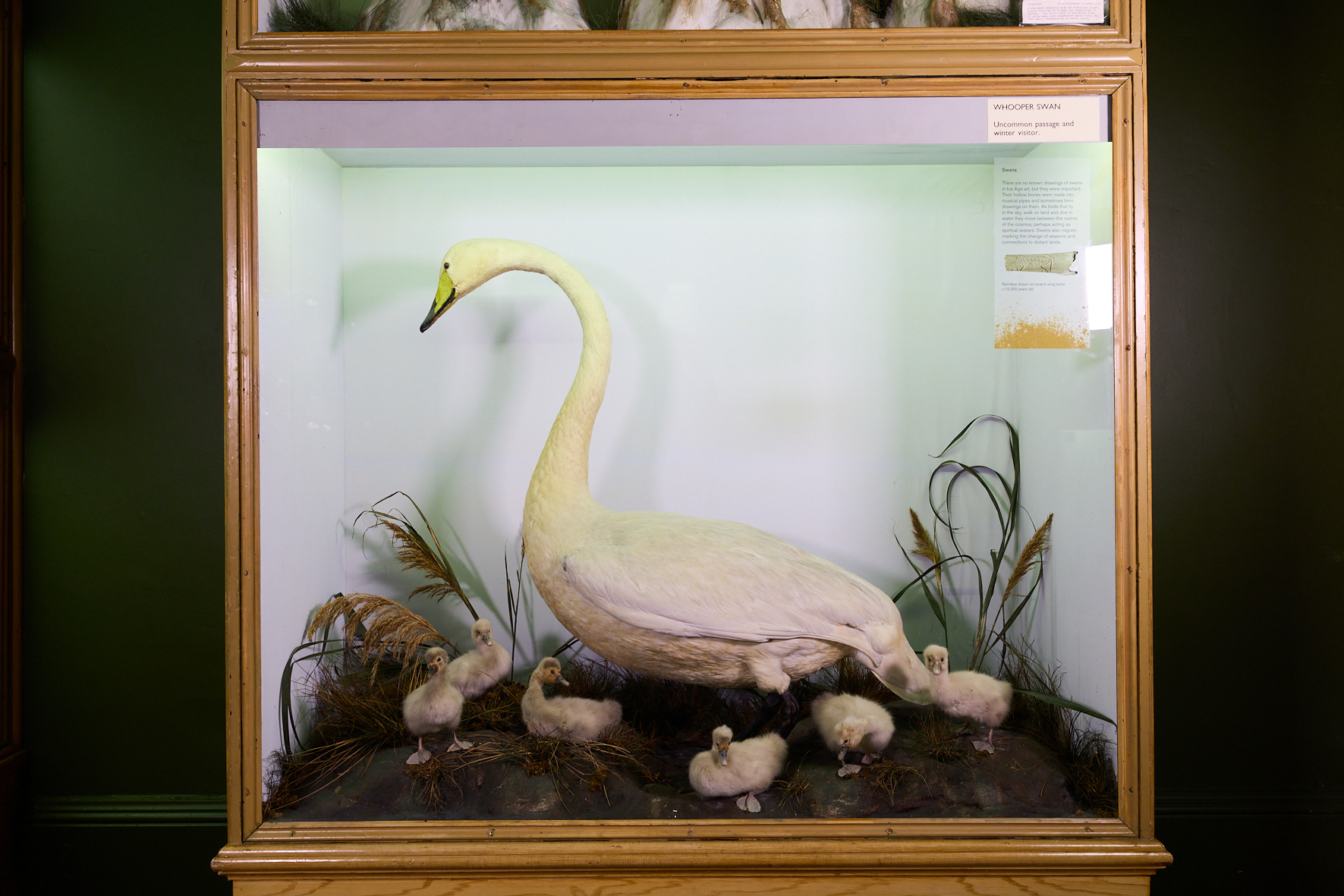
On entering the building a cloakroom and refreshment room respectively occupied the two rooms at each side. On ascending into the assembly room it was found that this splendid room was filled with various objects; down the left side of the room on a stand were a large no of cases containing birds, fowls, animals etc. Many of them containing animals either very rare or remarkable for their beauty. These cases had been lent by various naturalists in the District and a large amount of interest was centred on them, many people having evidently seen them for the first time.
Taxidermy swan in Natural Sciences Galleries at Cliffe Castle an example of the type of displays common at the time
In the transept on this side of the room was an unfinished rockery, which if it had been completed would no doubt have been a capital piece of workmanship. Rome was however not built in a day and the class no doubt found they had more work to do than time to do it in- and were not able to arrange everything in time for the opening.; it will however probably be completed today.
The centre of the room was occupied by a row of seats for those who were tired to rest themselves. On the right hand side of the room was a stand with a no of working models, churches, pieces of curious workmanship, musical boxes etc and this also was well attended.
On this stand was placed one of the peep shows, where for a penny one could see something wonderful !This was principally under the superintendence of Miss M. A. Holmes
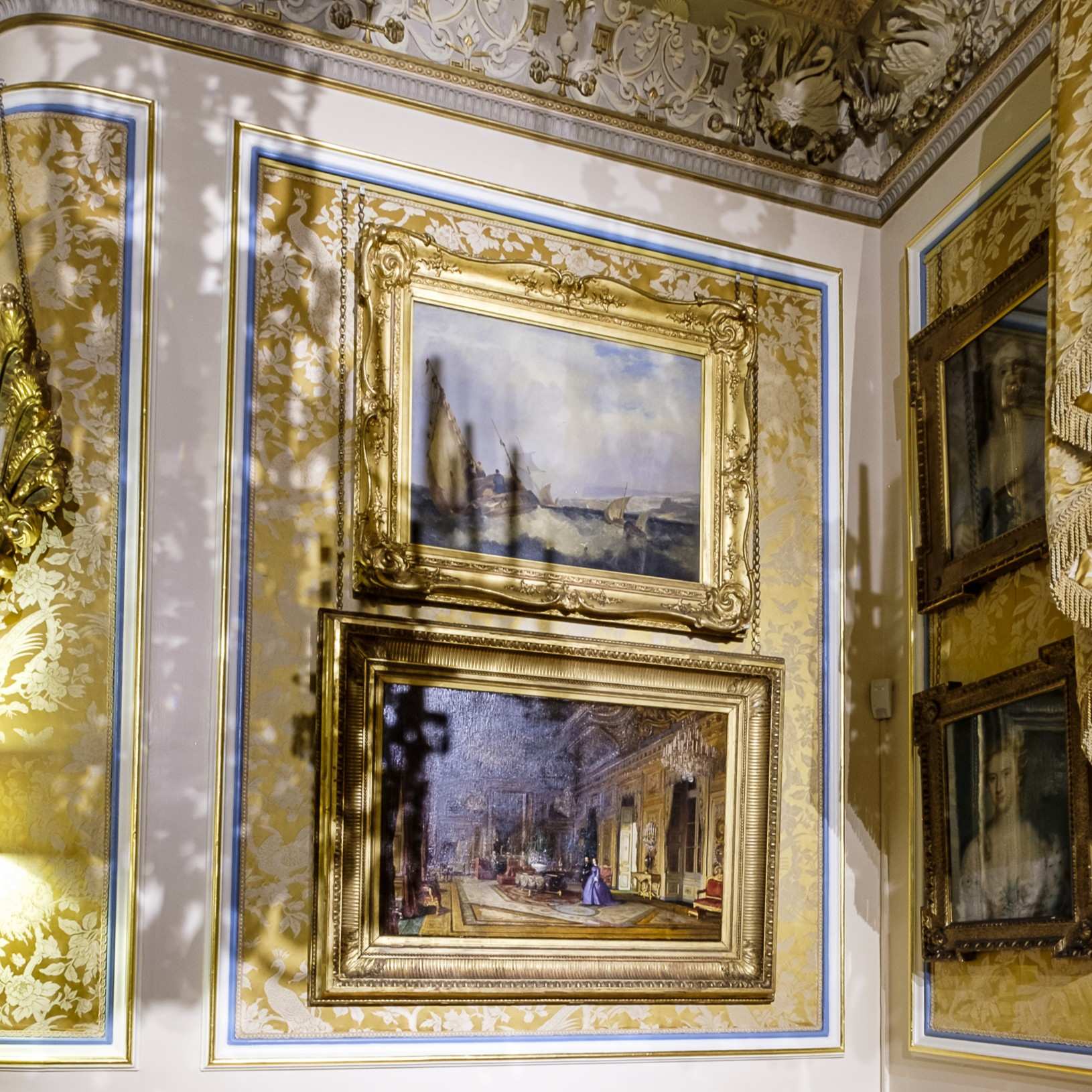
In the front of the platform were two large pictures , which had been received direct from Italy and which are intended for Cliffe Hall : without attempting criticise the pictures , it may be said that they appear to have too much colouring about them. Mr Butterfield however is said to have given a large price for them. This room was also ranged round with a large no of oil paintings etc some of which were considerably above the average.
Some of Henry Isaac Butterfield art collection – showing his taste, if not the specific artwork mentioned
In the first classroom on the left hand side Mr E Craven exhibited an Arab printing machineand there were also several models of steam engines, locomotives pumps etc and round them were hung several paintings and engravings. In an adjoining room was placed a large no of chemical and electrical apparatus.
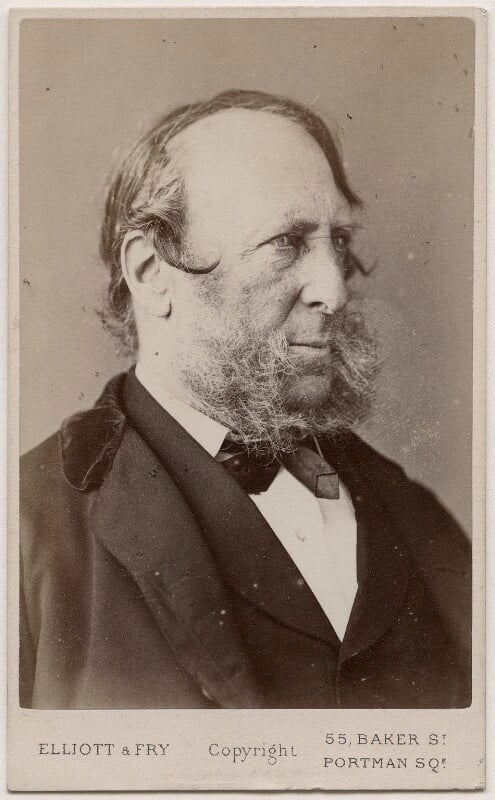
On the walls of this room and the one adjoining are twelve pictures illustrative of “ life on the road” the work of the late Mr George Cruikshank , the well known and widely lamented caricaturist
These pictures and several others had been lent by Mr J Craven and are amongst the most attractive objects of the exhibition and attract considerable attention as the works are so full of humour.
There were also several of Leech’s pictures exhibited in these rooms. 1In the third of the classrooms was placed a number of copies of old bibles, some of which are over 200 years old.
On the other side of the room was the fancy burlesque peep show and a wild beast show and in the remaining classroom a number of samples of old china and curiosities from all parts of the world were stored and exhibited for exhibition.
In the right hand corner of the room was placed one of the most attractive parts of the exhibition “The Gypsies Tent “ where for a moderate charge, without crossing the hands with silver the Gipsies (Misses Robertshaw, Raynes, Brierley, Wild, Holmes and others)would tell your fortune , and if not true no one else was to blame but yourselves.
In the classroom upstairs were placed a large no of curiosities and “ other articles too numerous to mention” as the auctioneer would put it. Old china was there to be found in abundance, some of which were capital specimens. Curiosities both for their rareness and the places where they had come from, were also there in great profusion, while the walls were covered with photos of beautiful landscape scenes, notable buildings, famous paintings etc.
There also exhibited a large number of oil paintings, chromos (chromo lithographs) and steel engravings. The centre room on this floor was devoted to the microscopes, which were not well attended to. At the end of the corridor in the portrait room was the moving wax work which attracted considerable attention.
In one of the rooms were also hung on the wall three pictures or cases , which were extremely interesting and which we believe lent by Mr J. T. Calvert , standing a short distance away, they appeared to be ordinary pictures and one of them apppeared to be merely a drawing of a dogs head with circles round it, On going nearer to the, however they were found to be made of butterflies, which had been so ingeniously arranged as to produce that effect , many hundreds of butterflies being used for the purpose. There were also a number of rare and beautiful ferns in the room.
Altogether the exhibition must be taken to be a complete success and the class complimented on collection they have made. The articles exhibited it must be borne in mind are not brought from any museum or curiosity shop in some other town but are all the property of ladies and gentlemen in the District and lent by them for the purpose .
On Thursday night there was an exhibition of views by the aid of a powerful magic lantern and last night there was a concert given by the chapel choir .The attendance has been good so far , but it is expected that there will be a great many people present today for which the Keighley Reed Band are engaged.
The exhibition is well worth a visit without any ulterior attraction and probably as good an one, with the exception of the one held in the Mechanics Institute a few years ago, as could be got together in this district, The pictures and photos alone are well worth a visit and if they were more conveniently arranged would be much better. “
There are a few clues that give us a rough indication of possible dates, as the precise date of the clipping was frustratingly not included (such is sometimes the lot working in museums – the key bit of info is tantalisingly out of reach….)
We know that the Sunday School referenced wasn’t opened until 1877, so it’s got to be after that.
It could be early 1880s as it references ‘Cliffe Hall’ rather than Cliffe Castle, but that Henry Isaac Butterfield was known to be collecting objects and artwork include as part of the alterations and renovovations and it was called Cliffe Castle in 1884.
The artist George Cruikshank is mentioned as ‘the late’ – which means it has to be after his death in 1878.
It is always an exciting time in the museum when we install a new exhibition. We recently opened a new exhibition at Bradford Industrial Museum called Steampunk (for those unsure as to what Steampunk is, I refer you to an earlier blog post.) Nearly 300 people attended the opening and it was thrilling to see visitors not only excited by the weird and wonderful Steampunk exhibits, but also by the pieces from our permanent collection alongside.
In 1884 Cliffe Castle’s owner Henry Isaac Butterfield held a grand ball at his home. The event was described in several newspapers at the time. Guests were expected to wear white at the event. It was described in the French style as a Bal Blanc.