Accessibility

Bradford District is home to some of the most exciting museums and galleries in Yorkshire. From the Baroque splendour of Cartwright Hall Art Gallery to the spectacular building of Keighley’s Cliffe Castle Museum, there is always something new to do or see, and admission is free!

Accessibility at our museums

Callout for Access Panel participants

Bradford District Museums and Galleries are looking to establish an “Access Forum”. This will be a group of people who bring the perspective of disabled, d/Deaf and neurodivergent lived experience to the Museums.  
Across our four sites, we know that there are barriers in place for disabled, d/Deaf and neurodivergent people. We also know that we can do more to represent disabled people in our exhibitions, our website, and our marketing materials. We want our work to be informed by disabled voices so that we are not putting more barriers in place.
This Access Forum will be a group of people with lived experience of disability, d/Deafness or neurodiversity to give advice to the Museums. As well as helping the Museums to develop our practice around accessibility and inclusion, the group will also advice on the planning and development of events, exhibitions, and interpretation across all four of our sites. The group will define its own terms and decide upon its final name.
This project will be disabled led, by BDMG’s Learning and Outreach Manager, Pen Foreman. Pen is a disabled person and access consultant, formerly leading on Historic England’s Disability Access to Heritage work.
You can find out more by emailing Pen directly: Penelope.foreman@bradford.gov.uk
Click here for more information
What does “disability” refer to in this context?
We invite anyone who is disabled, d/Deaf, or neurodivergent to take part in the Access Forum. However, we recognise that those terms may not feel like the right ones to many people, and that disability is a complicated concept with many different definitions.
Individuals may identify with or prefer different terms to describe their lived experiences, and some people may not identify with the term “disabled.” Though the Access Forum is designed to bring disabled voices into the Museums, we recognise that there is no one way of experiencing disability, and that “disability” as a term can cover a vast range of experiences and identities. We know that people prefer a variety of different ways to talk about themselves – or may prefer no label at all.
To make it clear that we are looking for a broad range of experiences, we are using the definition developed by Pen Foreman during their work with Historic England.
The term ‘disabled people’ in this project covers people:
• With a diagnosis of a disability or chronic illness
• With a diagnosed learning disability
• Who are d/Deaf, Culturally Deaf, deafblind, deafened or have hearing loss
• Who are blind, partially sighted, have low vision or have sight loss
• With a diagnosis of a mental health condition
• Who are neurodivergent
• Who are currently in the process of diagnosis or investigation of any of the above
• Who identify as disabled

• Who are classified as disabled under the terms of the Equality Act 2010

Draft Terms of Reference
These terms are a draft, because the final terms will not be agreed until the group is brought together and defines itself as the first act of shared ownership and decision making.
These draft terms are designed to demonstrate BDMG’s commitment to the Access Forum. They have been written to guide those applying to be members in understanding the ideas behind the Forum. We hope it will help people to judge if joining the Forum would be the right opportunity for them.
  1. The Forum will be made up of members that have lived experience of disability, d/Deafness or neurodiversity. Access Forum members are not expected to share any details of their disability, d/Deafness or neurodiversity with the group unless they wish to do so.
  2. The Access Forum will be guided by a Code of Conduct that makes sure that participants are not exposed to harm, and so there are clear expectations around behaviour, as well as clear sanctions and actions for breaches of the Code. This Code will also make meeting structure and procedures clear, so there are no “unwritten rules” and everyone has a clear understanding of what will happen at Forum meetings.
  3. There is no “leader” of the Forum – only a chair of sessions who makes sure that behaviour expectations are met and discussion points flow. No voice is more valuable or prioritised, all are equally valid.
  4. Lived experience is valued as expertise, and we make sure people are paid for that expertise. We pay travel expenses as well as a set fee for each Forum session. Payment mechanism for this fee will be decided by the Forum members, to ensure nobody is disadvantaged by taking part.
  5. The Access Forum and the Museums’ approach to accessibility are grounded in the Social Model of Disability. We work from the position that people are disabled by barriers put in place by a society that does not invest money or empathy in making accommodations and adaptations, and we reject the medical model that individual people are a problem to be fixed.
  6. Members of the Forum will have an Access Passport to complete when they join, so that their access needs can be met.
  7. The Access Forum will have some dedicated funding to put actions into place based on recommendations it makes, and BDMG will actively seek funding opportunities to increase this available funding.
  8. The Access Forum will meet at a physical location that has good accessibility, in recognition that “fully accessible” does not exist. Hybrid meetings will be supported for anyone who does not find in person meetings accessible.
  9. Meetings will take place on a schedule agreed by the Forum members, and meeting actions will be shared at BDMG management meetings so awareness of the Forum and its work is high across the Museum Service.
  10. The Access Forum will advise on accessibility and inclusion across BDMG, but they will also work beyond this. The Forum will give their perspective and expertise on other areas of the Museums including events, exhibitions, interpretation, and community engagement. We value disabled voices across everything we do.
  11. The Terms of Reference will be reviewed annually.
  12. The Access Forum works on a model of continual reflection, taking into account feedback and discussion and adapting ways of working.
  13. Membership of the Access Forum will be limited to 12 people in order to make sure all can have the opportunity to share their voice in sessions and meetings do not become too long.
  14. Members of the Access Forum will have to complete a Register of Interests, so any organisations or groups they are part of can be noted, and then conflicts of interest can be declared. This is to make sure that any decisions or recommendations are made with transparency.
  15. BDMG recognises that people will not be able to attend every meeting, and that sometimes people will need to give very short notice of non-attendance due to fluctuating energy, health conditions, or other personal reasons. There will be ways to take part in discussions even if you cannot attend the “live” meeting.
  16. All reports made by the Access Forum will also be produced in large print and Easy Read formats.
Invitation to join the Access Forum
How can I apply?
You can apply in one of three ways:
  • Complete this form online : https://forms.office.com/e/HNSNwzdb4p
  • Record a short video or audio recording answering the application questions
  • Arrange an in-person or Teams chat to talk through the application questions
Any of the above can be done with the support of carers, partners, family, or other support structures you may have in place.
We are asking questions so that we know why you want to join the Access Forum, and to make sure we have a range of lived experiences represented in the group. The answers also help us to understand what access needs there are in the Forum. We also want to hear from people who live, work, or study in Bradford, so we will ask for your address or place of work or study.  
Your answers will be confidential and will never be shared with the rest of the Access Forum group. We will keep all of your data secure, in line with GDPR. Only the lead for the Access Forum, Pen Foreman, will have access to your personal data and it will only be kept for the purpose of making any necessary accommodations. We will only use your contact details to contact you about the Access Forum and its meetings, and we will keep communication to a minimum to avoid overwhelming anyone.
What questions will be in the application?
The following questions are the same across all methods of application:
  1. What is your full name?
  2. What is your email address?
  3. What I your phone number?
  4. What is your address?
  5. How do you prefer to be contacted?
  6. Do you live, work, or study in Bradford?
  7. Why do you want to be part of the Access Forum?
  8. How often do you visit one of the Bradford District Museums and Galleries? We are looking for people who visit a lot, who only visit sometimes, or who have never visited at all, so there is no wrong answer:
  9. Are you disabled, d/Deaf, or neurodivergent? Please see our definition for what is covered by this. We are looking for people who fit into any of these categories:
      • With a diagnosis of a disability or chronic illness
      • With a diagnosed learning disability
      • Who are d/Deaf, Culturally Deaf, deafblind, deafened or have hearing loss
      • Who are blind, partially sighted, have low vision or have sight loss
      • With a diagnosis of a mental health condition.
      • Who are neurodivergent
      • Who are currently in the process of diagnosis or investigation of any of the above.
      • Who identify as disabled
      • Who are classified as disabled under the terms of the Equality Act 2010
  1. From the list, how would you define your disability? We are asking this as we want to have a range of lived experience in the group. You can select more than one option. It is OK if you do not use the term “disabled” to describe yourself, but still fit into one of these categories:
      • With a diagnosis of a disability or chronic illness
      • With a diagnosed learning disability
      • Who are d/Deaf, Culturally Deaf, deafblind, deafened or have hearing loss
      • Who are Blind, partially sighted, visually impaired, have low vision or have sight loss
      • With a diagnosis of a mental health condition
      • Who are neurodivergent
      • Who are currently in the process of diagnosis or investigation of any of the above
      • Who identify as disabled
      • Who are classified as disabled under the terms of the Equality Act 2010
      • I prefer a different term (please fill in the box below)
  1. If you prefer another term, please write it here:
  2. Would you be able to attend in-person meetings? We are asking this to see what format the meetings should be in. We will not discriminate on the basis on the type of meeting people prefer when choosing Forum members. 
  3. What are your access requirements for in-person meetings? Please note these will be kept confidential and only the project lead will have access to this information for the purposes of making accommodations.
  4. Would you be able to attend hybrid or online meetings via Teams or another platform?
  5. What are your access needs for hybrid or online meetings?
When can I apply?
Applications will be open from 8:00am December 1st, 2025 to 5:00 pm on February 28, 2026.
When will the first meeting be?
The first meeting will be in March or April 2026, and we will choose a final date when the Access Forum membership has been finalised.
Where will the first meeting be?
When the final Access Forum group is established, we will have a better idea of the access needs to accommodate, so we will make a final decision about venue in March 2026. We will always give at least 4 weeks’ notice for venue and timings of Forum meetings.
 

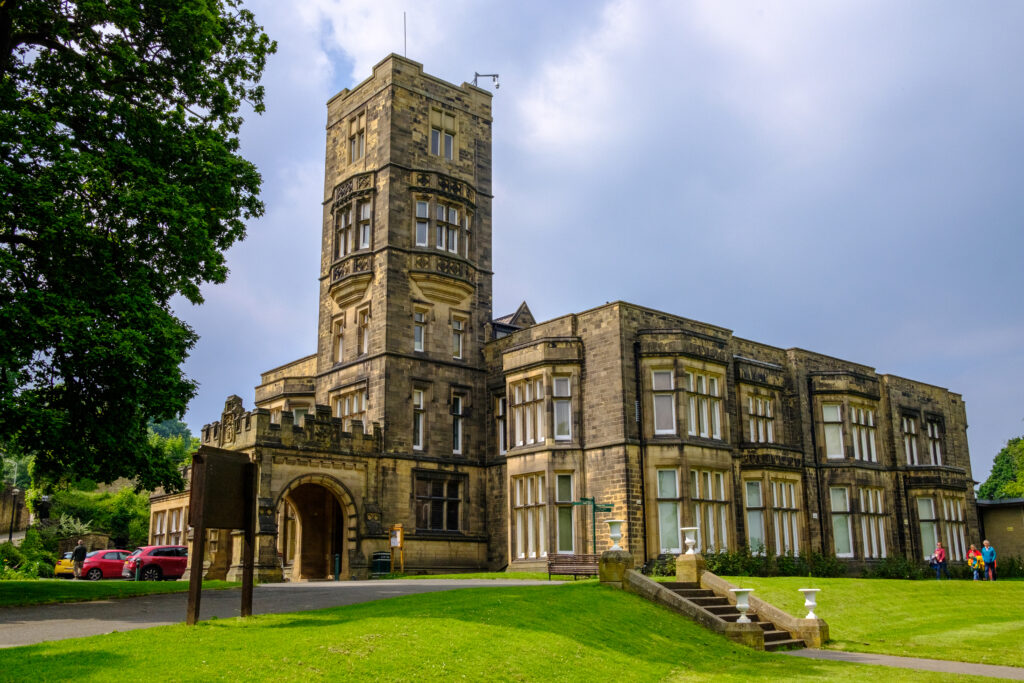
Cliffe Castle lies in a park on the outskirts of Keighley off the A629 Skipton Road. Approximately 12-25 minutes walk from the railway station, 6-15 minutes walk from the bus station. Buses (for example Bradford to Skipton) pass the lower main gates. The 903 bus service operates from Keighley Bus Station and serves Cliffe Castle on a limited basis.

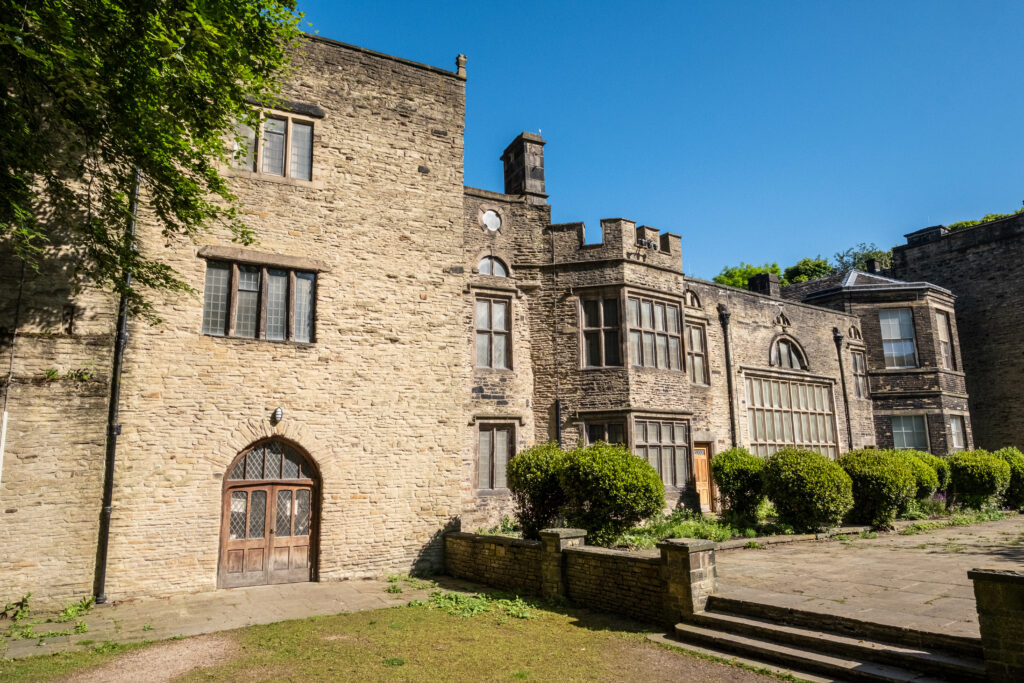
Bolling Hall is situated on Bowling Hall Road one mile south of Bradford City Centre and is signposted with heritage ‘brown signs’ from A650 Wakefield Road. The 634 bus runs to Bolling Hall from Bradford Interchange.

All our staff receive disability awareness/equality training.
Situated in the original 1904 Refreshment Room of Cartwright Hall Art Gallery, it is the perfect place to relax, get a good coffee and perhaps treat yourself to a deliciously tempting home baked cake or snack.

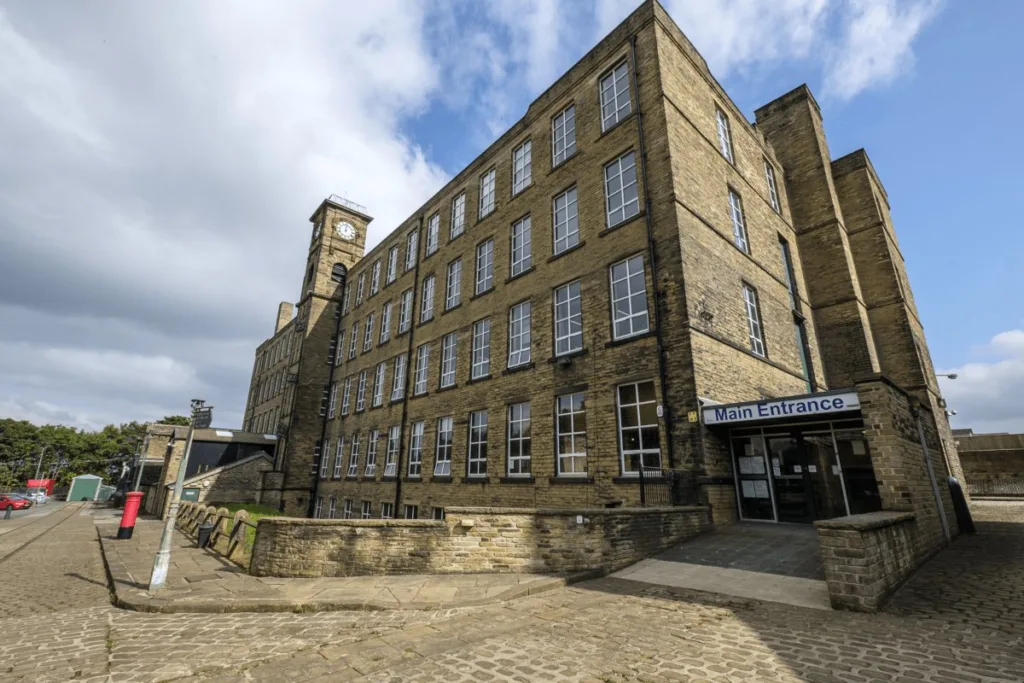
Signposted from Bradford Ring Road and Harrogate Road (A658). Bus 645 from Market Street or Hall Ings. All buses stop at Moorside Road. On the museum site there is free car parking and disabled car parking.

Donate

Could you support our work by sponsoring, donating or volunteering?

All opportunities have flexible commitment requirements and aim to provide a rewarding and enriching experience for all.

Bradford District is home to some of the most exciting museums and galleries in Yorkshire. From the Baroque splendour of Cartwright Hall Art Gallery to the spectacular building of Keighley’s Cliffe Castle Museum, there is always something new to do or see, and admission is free!

About Us

Bradford District is home to some of the most exciting museums and galleries in Yorkshire. Come and see for yourself.

Skip to content