
Our latest blog explores the Herbarium collections at Cliffe Castle and is written by Anysia. She writes:
Did you know Cliffe Castle houses over 60,000 herbarium specimens?
My name is Anysia, I’m a final year Archaeology student at the University of Bradford. Over the last seven months, I’ve been working with Bradford District Museums and Galleries (BDMG), investigating their herbarium and its archives for my dissertation on the value of herbaria collections in heritage engagement.
For my dissertation, I have chosen to focus on the orchid specimens in two of the larger collections at Cliffe Castle, the Frederic Arnold Lees (1847- 1921) and the William Arthur Sledge (1904-1991) herbaria collections.
A herbarium is a collection of preserved plant specimens which have been dried, pressed and mounted on paper or in a book. These are important botanical archives that provide a wealth of knowledge for researchers today, helping them to understand the distribution of plants and threats to these species. There are an estimated 70,000 unknown species that are yet to be described among the 400 million herbarium specimens around the world.
The method of collecting and preserving plants is thought to have started in the 1500s with an Italian doctor named Luca Ghini, though others across Europe developed their own methods. Ghini’s was the most popular and is the main method still used today.
The majority of the herbarium collections at Cliffe Castle were collected in the 1800s when botanical collecting was extremely popular among professional and amateur Victorian botanists.
A typical herbarium specimen includes:
![This image shows two large bee orchids, taped flat with small strips of thin white tape to a large sheet of paper with a small collection label in the bottom right corner. Next to the specimens is a colour photograph of a bee orchid in the wild, it has three small purple petals in a triangular shape around the lip which has brown and yellow markings similar to a bee.]](https://bradfordmuseums.org/wp-content/uploads/2026/03/FIGURE-1-Bee-orchid-annotated-713x1024.png)
A bee orchid collected by Lees in 1867. It is annotated with the basic elements that make up a herbarium specimen: a dried pressed plant secured to mounting paper with a collection label, typically in the bottom right corner. The essential information needed on a collection label is the species name, collectors name, where and when it was collected.
The collectors
Dr Frederic Arnold Lees was a doctor and remarkable Yorkshire botanist. His passion for botany began whilst he was a student at Leeds Grammar School. Lees was best known as the author of the county’s official Flora,a book describing all the plants of a particular region. Lees’ The Flora of West Yorkshire was regarded as one of the best Flora in England at the time.
As well as his interest in science, Lees had a passion for art, often incorporating poems within his collections and botanical writing. I’m hoping to find some of his poems as I go through more of the collection.
Between 1838 and1906 Lees collected 25,000 specimens of native British plants and fungi specimens. Unsurprisingly, this collection contains nearly every native British plant species. There were only a few that ever escaped him like the mysterious ghost orchid (Epipogium aphyllum). This huge collection was bought by the Bradford Corporation (now Bradford Council) in 1906 and is now kept at Cliffe Castle along with his detailed field notebooks.
I was surprised to find comments made by Lees in the 1800s, in his writing and on his specimens, expressing his concern for the decline of different species of plants and insects. Like other collectors, he returned to some locations he collected his specimens from year after year noting changes to the environment. With this impressive collection and his lifelong dedication to botany, Lees has left behind a legacy of irreplaceable specimens.
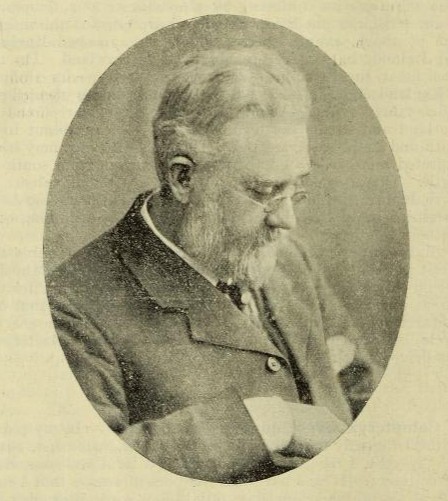
Dr. William Arthur Sledge lived in Leeds his whole life. Like Lees, his fascination with plants was sparked through a school project whilst attending Leeds Grammar School. His interest in botany led him to meet Lees who was living nearby at the time, sparking a passion that led Sledge to become a Senior Lecturer in Botany at the University of Leeds. Over his long career he was noted as one of the best botanists in Britain, being involved in local and important national botanical societies. His wife Marjorie Sledge, who went with him on plant collecting trips, described him as collecting with great care and precision, which is evident from his neat and well pressed specimens. From these trips he assessed over 6,000 native British specimens, from 1919 to 1989, with a particular interest in sedges and grasses. Sledge was also a founding member of the Yorkshire Naturalists’ Trust which is now the Yorkshire Wildlife Trust.
Due to his connection to Lees, in 1941 he co-authored a supplement to Lees’ Flora, with botanist C.A Cheetham. When Sledge was ready to pass on his collection, which was one of the strongest herbaria in the country, he gifted it to BDMG so that it could be kept together with Lees’ collection, creating one of the strongest herbaria in northern England.
Whilst going through the collections, I’ve seen some very interesting orchid specimens:
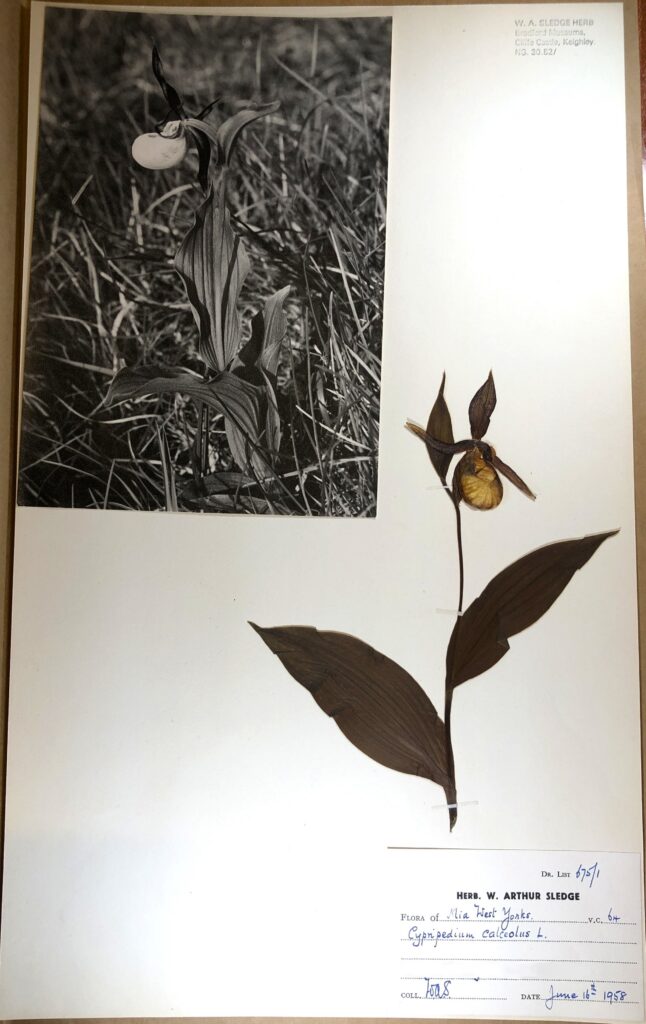
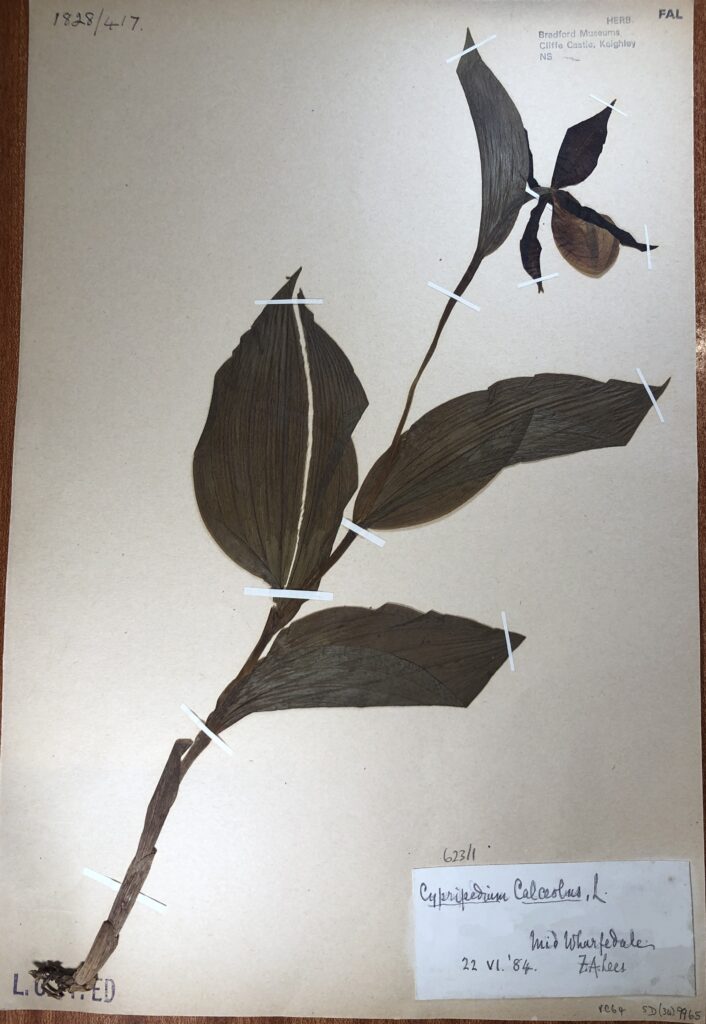
Lady’s-slipper orchid (Cypripedium calceolus):
You may have seen the famous Lady’s-slipper in a previous blog and even on Channel 4 news last year! Researching this flower was actually how I first came across BDMG’s herbarium last summer.
The Lady’s-slipper is a critically endangered orchid with a special connection to Yorkshire; the last site where this species grows wild is in the Yorkshire Dales. The exact location has been kept secret by the flower’s protectors, known as the guardians, since 1930. The overcollection of this flower began in the 1600s, reaching its height by the 1800s during the Victorian plant-collecting craze known as Orchidelirium. It was so sought after due to its unique colour and appearance, setting it apart from all other orchids found in Britain. Habitat loss then added to its decline, with the loss of open woodland and heavy sheep grazing. The threats to this species were so severe that it was thought to be extinct from the early 1900s until it was rediscovered in 1930 at a site in the Upper Wharfdale region of the Yorkshire Dales. This site is still under protection by dedicated wardens. It is vital the flowers remain undisturbed.
Summer Lady’s-tresses (Spiranthes aestivalis)
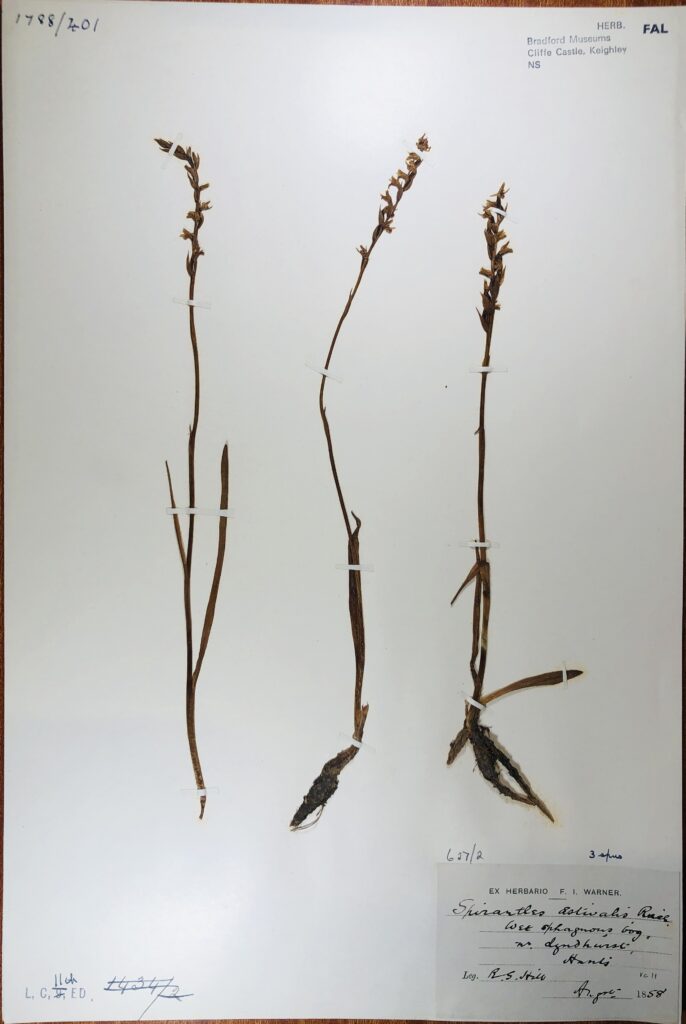
This species is now extinct in Britain and the Channel Islands. Its last recorded location was the New Forest in 1959, making this a very valuable specimen. This flower, like the Lady’s-slipper, was victim to over-collecting. There are a surprising seven sheets of specimens in the Lees collection, which is more than some of the more common species in the herbarium!
On some of these specimens, there are notes about the plant’s rarity in the collection locations. For example, it was noted as “less rare” in South Hampton in 1884, suggesting the collectors noticed an increase in population before its extinction. This kind of note can be very important for researchers today in understanding the changing distribution of species.
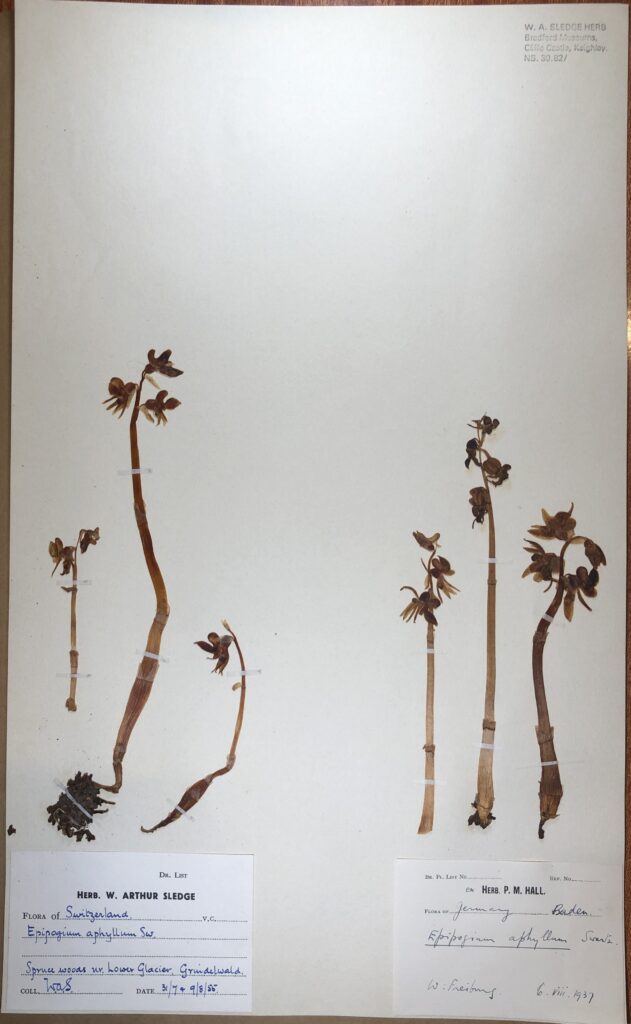
Ghost orchid (Epipogium aphyllum)
These specimens were not collected in Britain, though the species is a very rare British native and was a very exciting specimen to find. This flower is famous for its elusive nature, as its name suggests, it’s an extremely difficult species to find, haunting the habitat of dark and shaded woods! It is said to never flower in the same place twice! For this reason it was believed to be extinct in Britian from 1987 until it was found again in 2009.
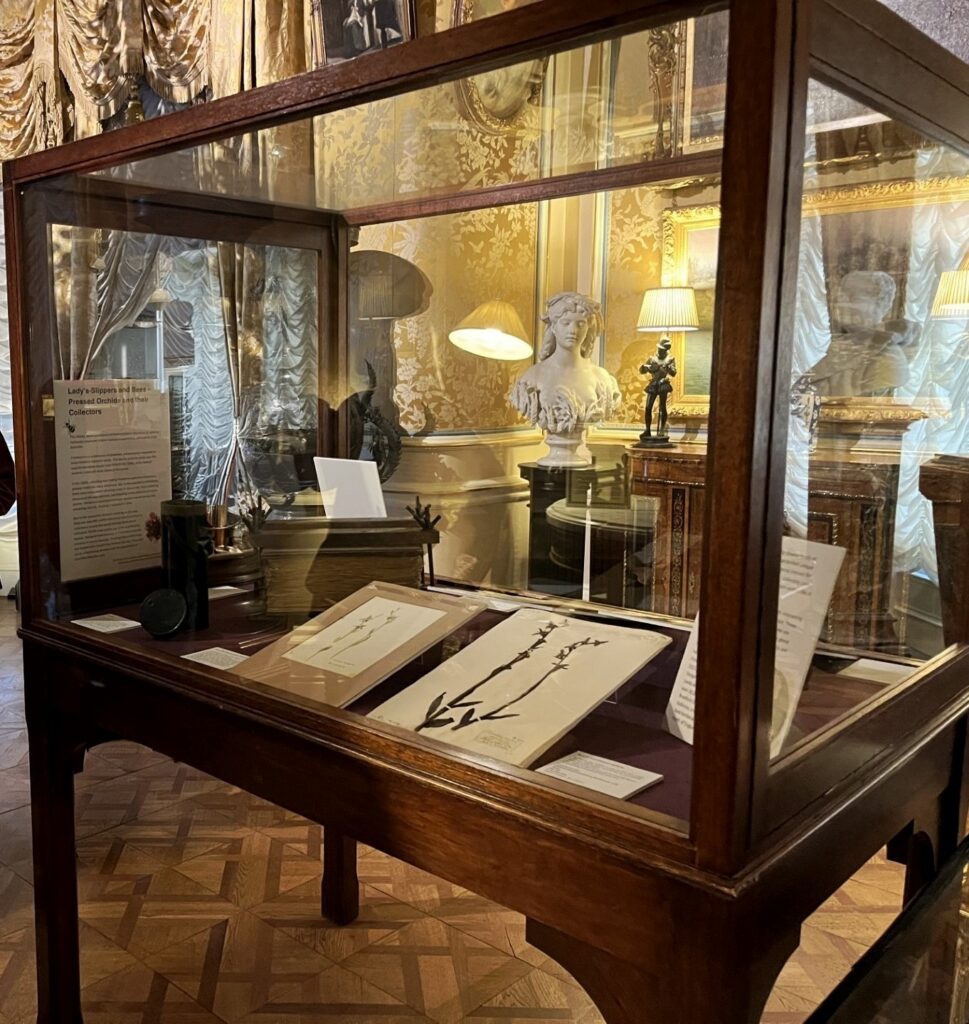
Come and visit Cliffe Castle between 27th March and 27th September to see some of these specimens and other objects related to the collectors
4 Responses
Very interesting, well done!
This was lovely to read and such an unusual topic. I had no idea these collections were available in our local area. Thank you.
It is remarkable that specimens collected generations ago can now help researchers study changing distributions and biodiversity.
The location, date, and collector labels turn each pressed plant into far more than a museum curiosity.
It’s fascinating that herbarium specimens collected more than a century ago can still help researchers understand how plant populations and habitats have changed. The Lady’s-slipper orchid story was especially interesting.