
This blog has been written by Heather Millard, Community Curator for the services and is looking ahead to an exhibition at Bradford Industrial Museum later this year.
She writes:
One of the things that is wonderful about the collections that we look after is the sheer range and variety of what we hold and the stories that we can tell with them. I’m currently busy looking through our collections to identify objects to share with our audience as part of ‘Made by Many Hands’ – an exhibition looking at heritage crafts – both endangered and non-endangered.
What is a Heritage craft, and why are they important?
The Heritage Crafts Association define it as a a craft that:
- has been practised for two or more successive generations.
- Employs manual dexterity and skill at the point of production;
- requires an understanding of traditional materials, design and techniques;
They are an organisation set up to Heritage Crafts is the UK charity set up to
celebrate, support and safeguard traditional craft skills, and to facilitate a national conversation about their importance to everyone now and in the future.
Heritage crafts as seen as an important part of what Unesco defines as ‘intangable cultural heritage’ for it’s members – which is more than just physical objects
Cultural heritage does not end at monuments and collections of objects. It also includes traditions or living expressions inherited from our ancestors and passed on to our descendants, such as oral traditions, performing arts, social practices, rituals, festive events, knowledge and practices concerning nature and the universe or the knowledge and skills to produce traditional crafts.
Obviously, as a museum service, objects are important to us – but in this case – it’s for showcasing the skills, traditions and materials of the craftspeople who made them.
However, not every craft is practiced as widely as it used to be, and many formerly commonplace crafts have become very rare as demand dwindles, resources become scarce or alternative options have taken over.
The Heritage Crafts Association has created what they call the ‘The Heritage Crafts Red List’, which details those traditional and cultural crafts currently at risk. The list is organised into 4 categories :
- Extinct in the UK
- Critically endangered
- Endangered
- Currently Viable
Crafts can move categories if things change – if they become more at risk, or if they experience a resurgence of interest that means that they are becoming more popular/practiced again, but it allows for the sector to monitor what it happening and to try to prevent crafts disappearing completely.
It’s an invaluable resource to identify crafts relevant to the area, and which ones in particular we should be focusing our interest on and was revised again in 2025.
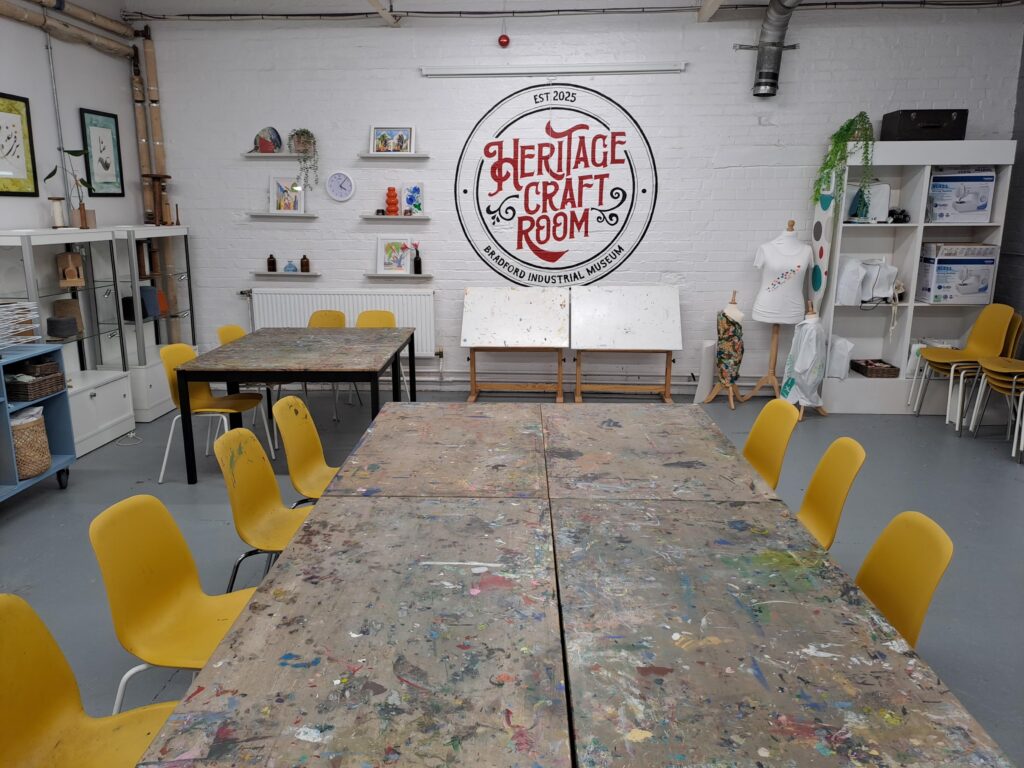
Last year, we opened our Heritage Craft Room – a space at Bradford Industrial Museum specifically designed to be a place where anyone can come and learn about and get hands on with crafts, in a welcoming and inclusive environment. We want as many people as possible to be able to use the space to discover, create, and meet. Find out more by following this link to a dedicated page – you can even hire the space yourself.
With all this in mind, an exhibition highlighting some heritage crafts of relevance to the Bradford District seemed like an excellent idea, and we’ll be launching the exhibition in May.
Some of what we’ll be focusing on within the exhibition is on the list – such as Cycle Frame building – did you know that Ellis Briggs cycle makers in Shipley is the oldest Custom Steel Framebuilders in the UK? Frame building is classed as an endangered category, but has a particularly significance for our area.
The exhibition has also given me a wonderful reason to go through some of the less-well used parts of our collection to highlight crafts.
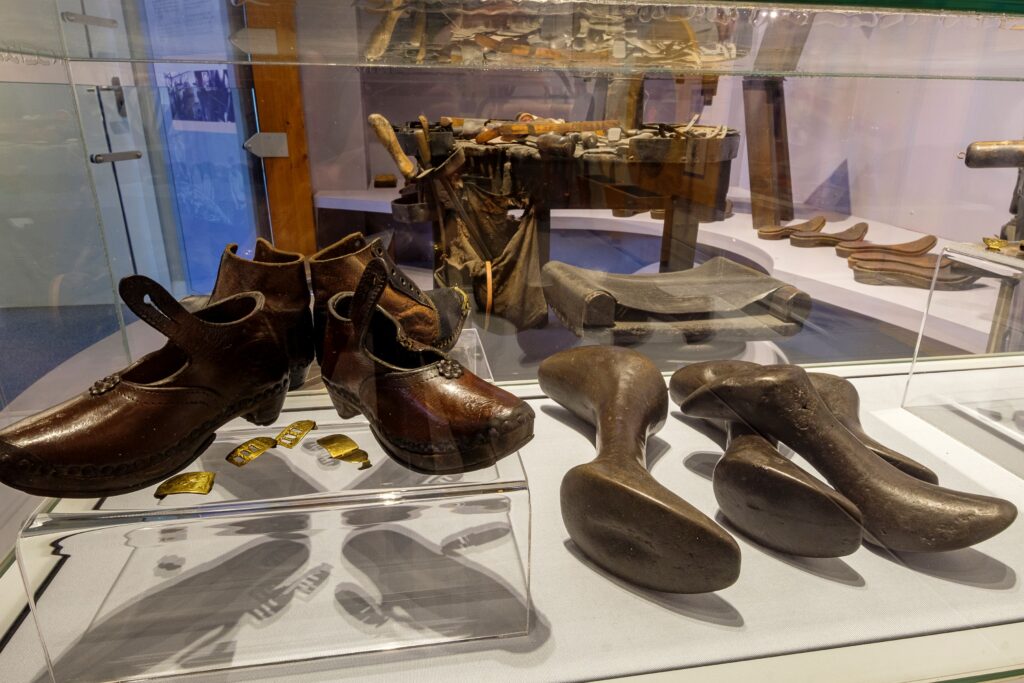
Clogmaking is on the Critically endangered list, yet was an important part of industrial life and is well represented within our collections – have you seen the clogmaker’s display at Cliffe Castle?
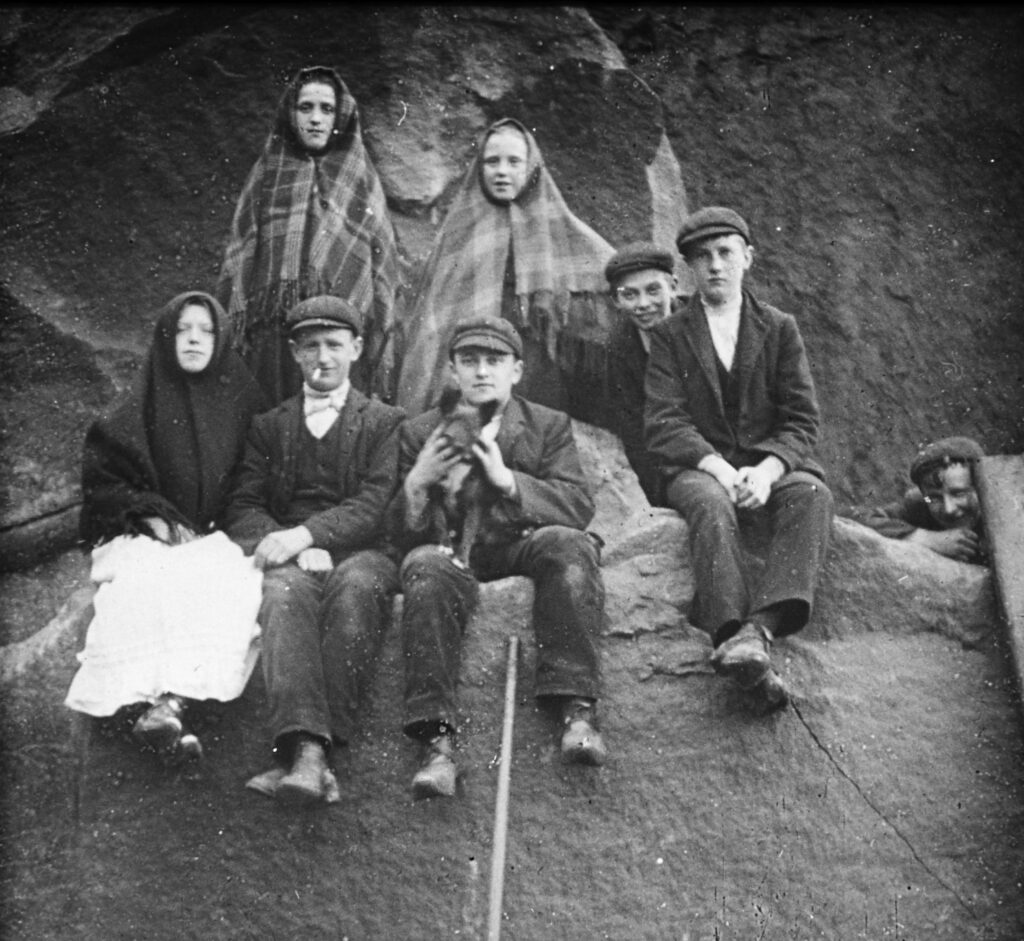
Not specifically mentioned on the endangered list, and used for a craft that is certainly enjoying a surge in actvity recently thanks to programmes like the ‘Game of Wool’ (we won’t get into the debate as to whether everything on the show is actually knitting though!) are these wonderfully curious things called ‘Knitting Sheaths’, which have intrigued me ever since I first came across them when I joined the service several years ago.
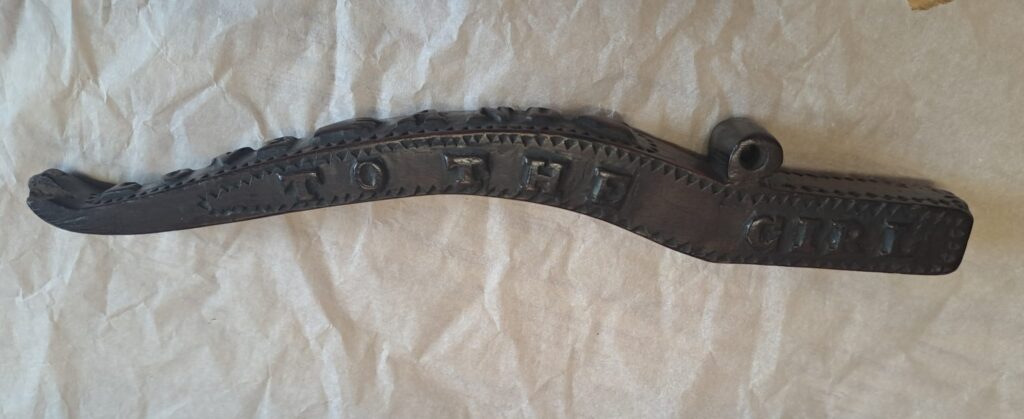
As the name suggests, they are used to help people knit! The idea is the sheaths attach to or are tucked into a belt, to hold one of a set of knitting needles. (this needs double ended needles or wires)
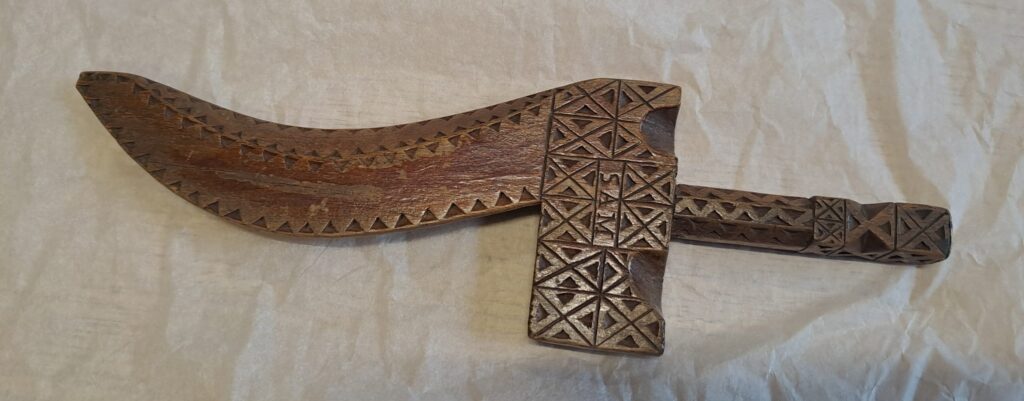
This allowed the user to knit one handed – and carry on with other jobs as they knit, or knit while they walked. It feels a very practical, Yorkshire thing to do, to invent something that means you can do two things at the same time- and they were fairly common in Yorkshire, with its reputation for hand-knitting, even before the Industrial Revolution and the explosion of textile manufacturing across the region.
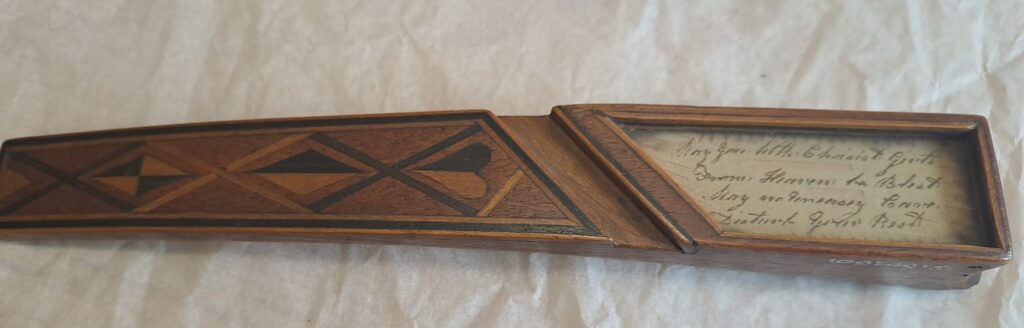
Sheathes were general wooden or metal (often brass) although sometimes made from other materials – the three I’ve picked to to show above are all wooden, but there were often additions of bone, ivory or other decorative
Although we’ll be focusing on Yorkshire and our collection of sheaths for the exhibition, the concept was also used in some coastal communities – Nairn Museum in Scotland recently shared a video showing off one of their ‘Whiskers’ – a padded belt that gave the same hands-free option for knitting – you can click this link to see it.
I think ours are prettier – but I am probably biased. In many cases the decorations will have had particularly meaning to the carver or the recipient, like those you find on carved wooden love spoons from Wales – which I was reminded of when I first saw them but with the practical Yorkshire use for them – and often made from left over materials too!
My problem will be whittling down (not literally, I hasten to add) a selection of them to show you from the range we have – ones shaped like goosewings, others are heartshaped or animal inspired ones, or maybe more with dedications – decisions decisions!
Although you’ll have to wait until May for the exhibition itself to launch, we’re busing at the moment finalising the object selections, writing the interpretation and working our an exciting programme of events to run alongside the exhibition, promoting heritage craft.
However, as National Craft Month is in March – keep any eye for earlier workshops we’re arranging in the Heritage Craft Space and in Bradford Industrial Museum by checking our whats on page and our social media reguarly – as things are confirmed we’ll be adding the details in. Who knows – you might find a new hobby or interest yourself as a result